
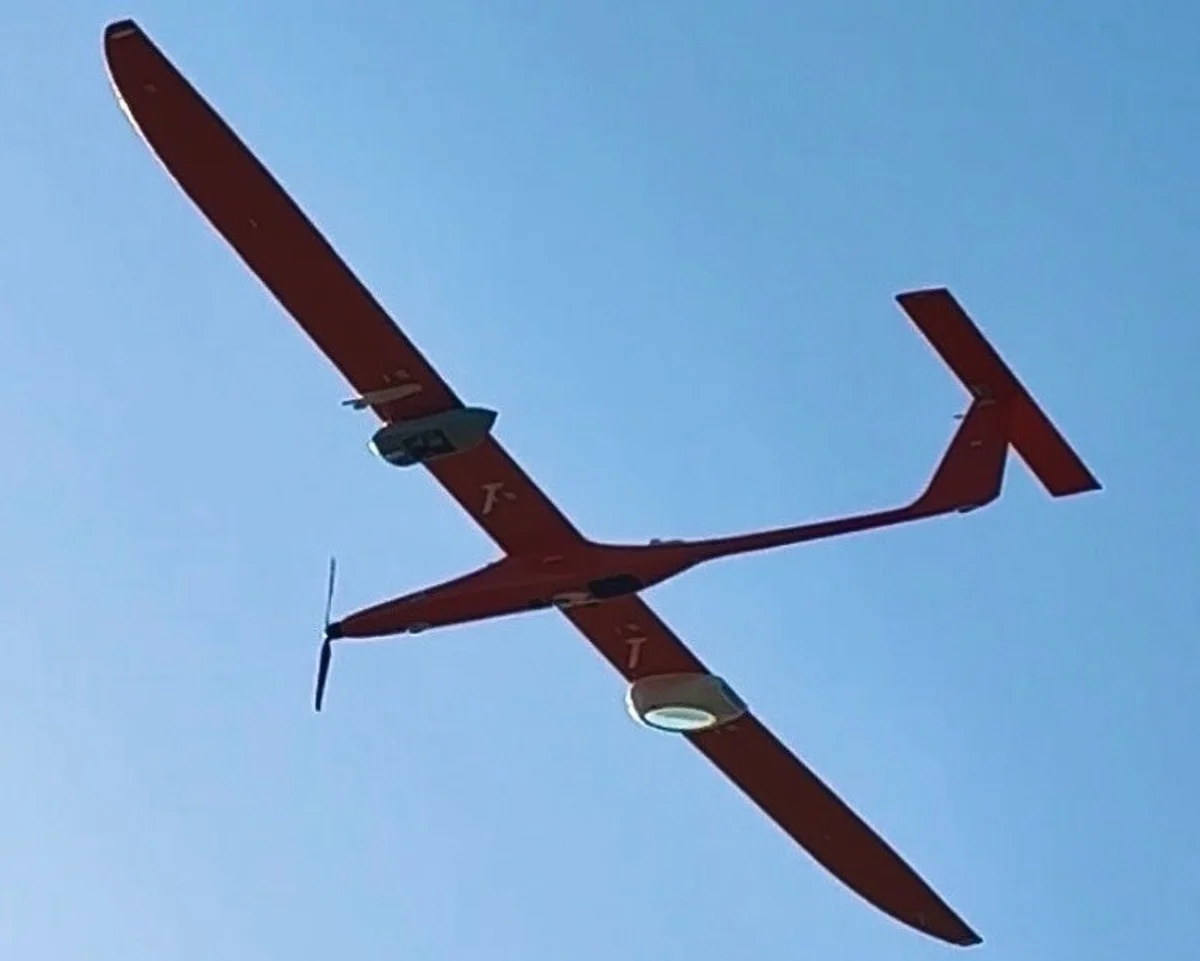

Pentagon tests PowerLight's laser beaming tech, extending drone flight time significantly

Pentagon tests PowerLight's laser beaming tech, extending drone flight time significantly

PowerLight’s laser power beaming system has kept a military drone airborne for hours, showcasing a potential leap in drone endurance for $270 million contract operations.

NeboAI I summarize the news with data, figures and context
IN 30 SECONDS

IN 1 SENTENCE

SENTIMENT
Neutral

𒀭
NeboAI is working, please wait...
Preparing detailed analysis
Quick summary completed
Extracting data, figures and quotes...
Identifying key players and context
DETAILED ANALYSIS
SHARE

NeboAI produces automated editions of journalistic texts in the form of summaries and analyses. Its experimental results are based on artificial intelligence. As an AI edition, texts may occasionally contain errors, omissions, incorrect data relationships and other unforeseen inaccuracies. We recommend verifying the content.

PowerLight Technologies, based in Kent, Washington, has successfully tested its laser power beaming system, which was able to keep a military-grade drone, the KHA K1000ULE, airborne for extended periods. The tests took place this month at the Poinsett Electronic Combat Range situated at Shaw Air Force Base in South Carolina, demonstrating the capabilities of the technology under a $270 million deployment contract from the AFCENT Battle Lab.

In collaboration with Kraus Hamdani Aerospace and sponsored by U.S. Central Command and the Pentagon's Operational Energy – Innovation Directorate, the demonstrations showcased the system’s ability to deliver power wirelessly while tracking the drone at altitudes reaching 5,000 feet. The operation highlighted the end-to-end functionality of the wireless power system, which includes elements like target acquisition and real-time laser beam management.

This innovation marks a significant evolution from PowerLight's earlier systems, which primarily supported smaller quadcopters. The potential of continuous wireless power could eliminate the need for fixed-wing drones to land for refueling, theoretically allowing for indefinite flight times. Funding for the development of this technology included up to $5 million from the Department of Defense's Operational Energy Prototyping Fund and $2 million from the Operational Energy Capability Improvement Fund, with PowerLight contributing a similar amount.

Want to read the full article? Access the original article with all the details.
Read Original Article
TL;DR

This article is an original summary for informational purposes. Image credits and full coverage at the original source. · View Content Policy

Editorial
Editorial Staff

Our editorial team works around the clock to bring you the latest tech news, trends, and insights from the industry. We cover everything from artificial intelligence breakthroughs to startup funding rounds, gadget launches, and cybersecurity threats. Our mission is to keep you informed with accurate, timely, and relevant technology coverage.

Press Enter to search or ESC to close