
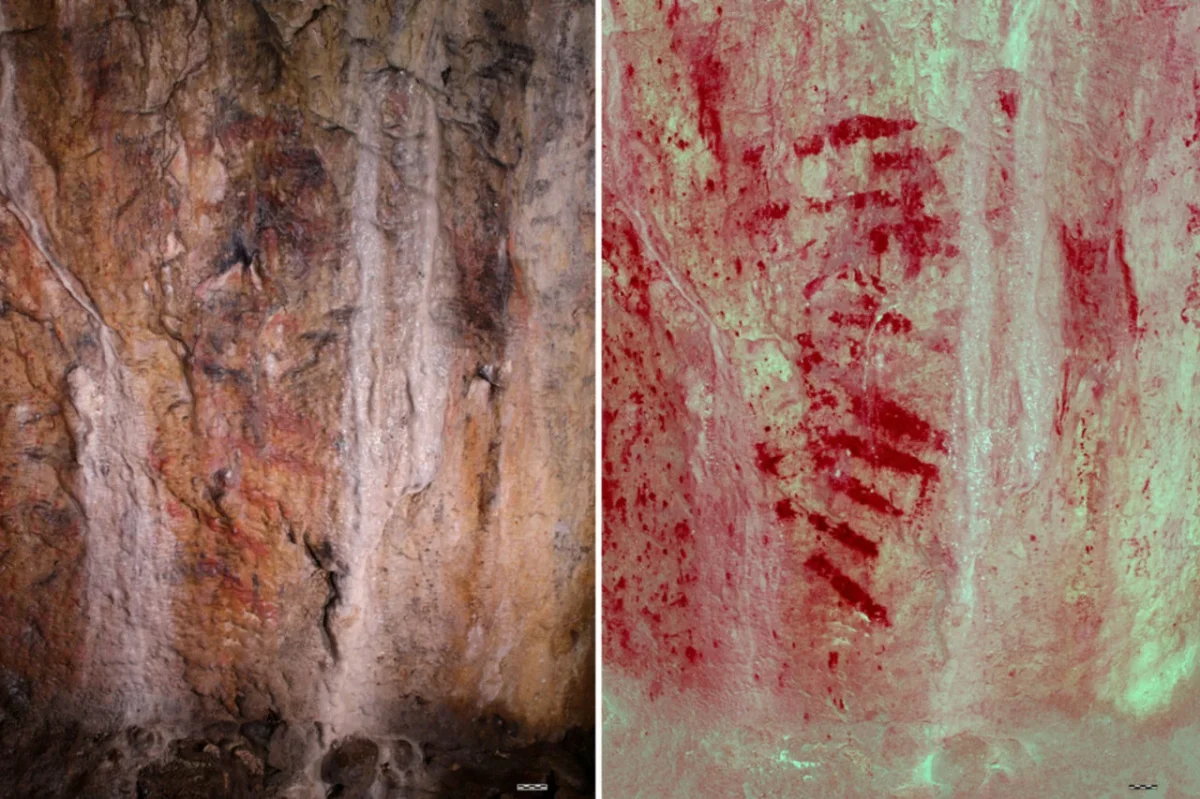

Recent research has established that markings in a cave in south Wales, initially dismissed as natural stains, are indeed ancient abstract art dating back approximately 17,100 years. This revelation corrects a long-held skepticism surrounding the significance of the cave's paintings, which were first documented in 1912 by British geologist William Sollas and French anthropologist Henri Breuil.
Modern techniques, including radioactive isotope dating and advanced image analysis, have validated the artistic nature of the markings found in Bacon Hole. Study coauthor George Nash, an archaeologist focused on prehistoric art, expressed his surprise at the ability to date and analyze the pigments, which had previously been deemed impossible.
The cave, known for its historical significance, had its ancient artworks obscured by more recent graffiti, including contributions from local fisherman Jonny Bates in the late 19th century. The confusion was compounded by a large stalagmite resembling bacon, contributing to the cave's name. Nash's study, published last week in the journal Quaternary, aims to rectify the historical narrative surrounding these important cultural artifacts.