
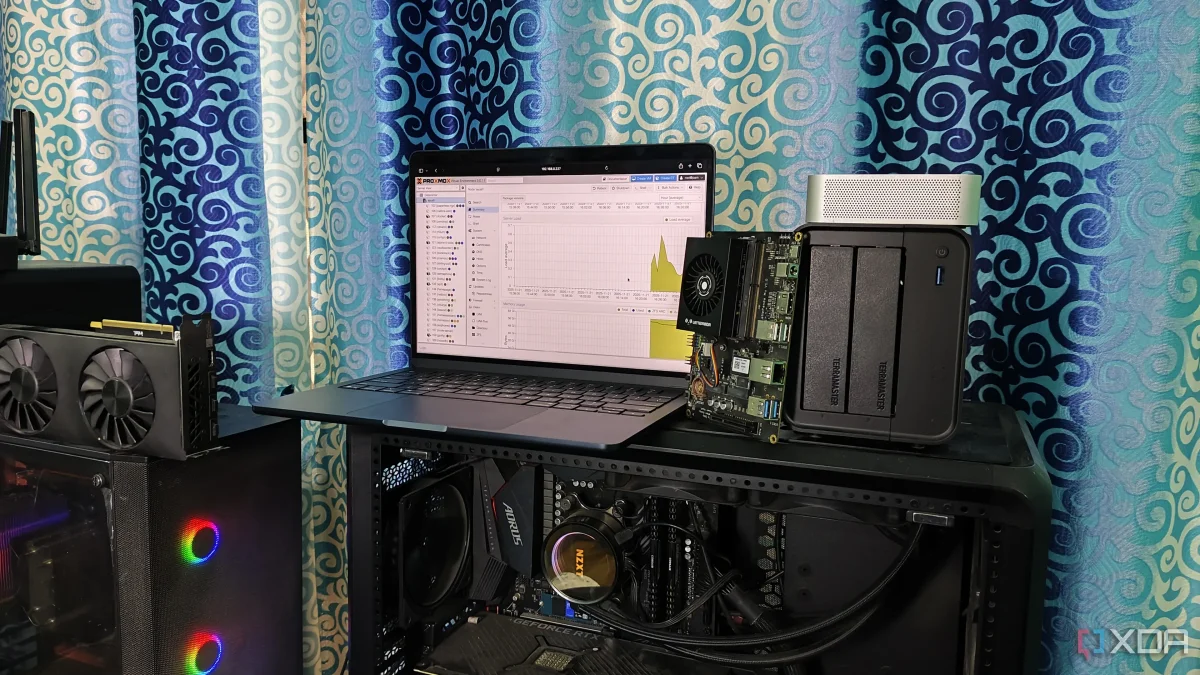

Starting a home lab often hinges on utilizing equipment already available rather than investing in specialized racks. Many enthusiasts begin their journeys with components like an old gaming PC or spare networking devices, which can be just as effective for experimentation and self-hosting as more advanced setups.
While the allure of a rack-mounted configuration may seem appealing, it introduces numerous complexities that can overwhelm newcomers. Racks require additional components such as rails, PDUs, and patch panels, which can lead to escalating costs. Additionally, these setups tend to generate significant heat and noise, making them less suitable for residential environments. Dust accumulation can further complicate maintenance, especially if housed in a closet.
Ultimately, for most individuals new to home labs, leveraging existing hardware is the most practical approach. This method not only simplifies the initial setup but also allows for a more comfortable and manageable home lab experience.