
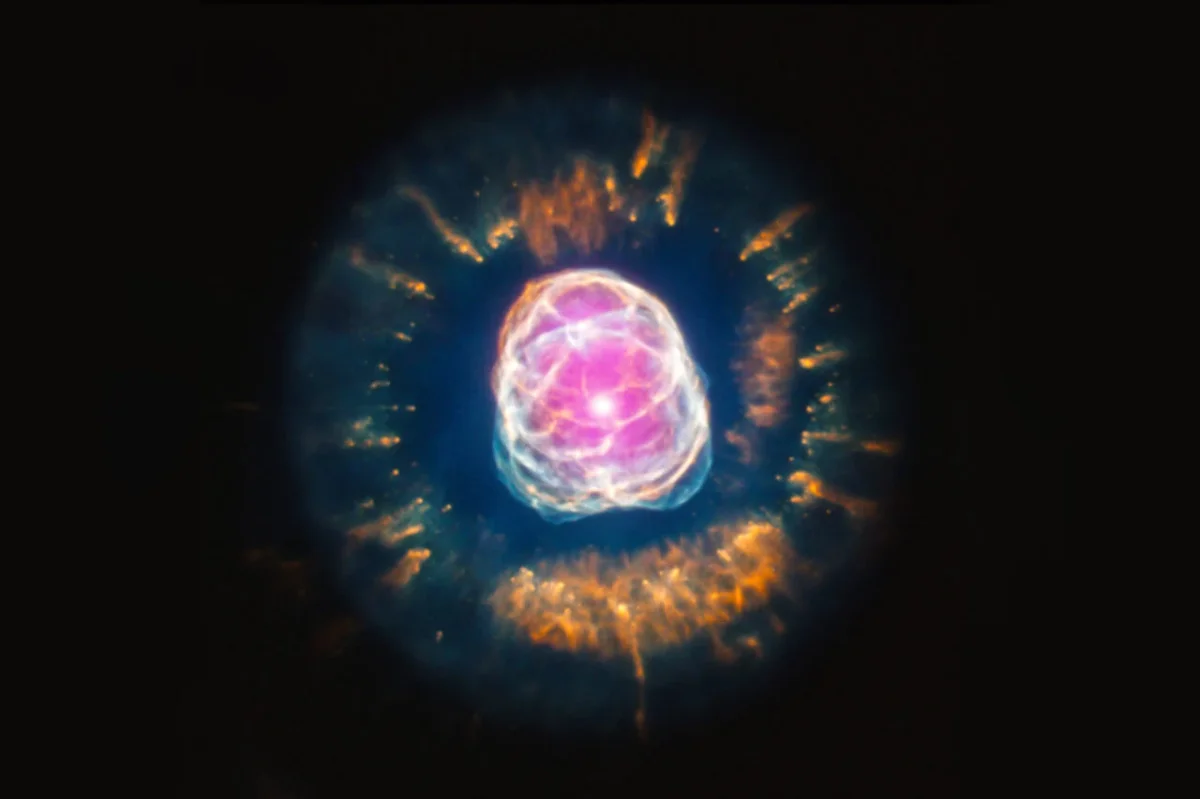

Astrophysicists at the University of British Columbia have explored the relationship between axions, a theoretical particle linked to dark matter, and the behavior of white dwarfs. While their recent analysis, available as an arXiv preprint, does not provide direct evidence for axions, it offers an intriguing perspective on the lifecycle of white dwarfs through the lens of axion physics.
Originally proposed in 1977 to address the matter-antimatter imbalance in quantum physics, axions have been considered a potential dark matter candidate. Although dark matter is believed to constitute around 85% of the universe, no definitive signs of axions have been detected to date.
White dwarfs, the remnants of stars, typically exhibit a unique stability due to electron degeneracy pressure, which prevents collapse despite immense gravitational forces. This phenomenon has drawn interest from physicists studying axions, as their interaction with such stellar remnants could reveal new insights into both axions and dark matter.