
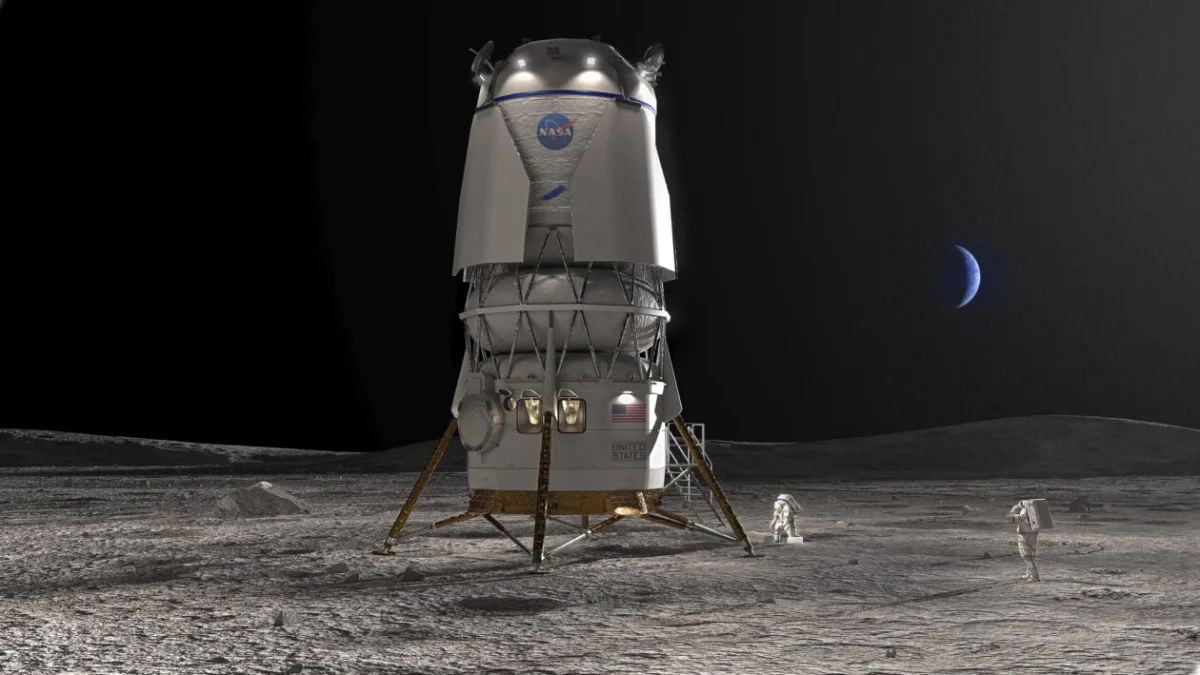

Blue Origin poised for expanded role in NASA's revamped Artemis moon mission

Blue Origin poised for expanded role in NASA's revamped Artemis moon mission

NASA's Artemis program shifts, delaying lunar landing to 2028, while testing Blue Origin's lander next year. The new plan aims for annual lunar missions, reigniting moon exploration.

NeboAI I summarize the news with data, figures and context
IN 30 SECONDS

IN 1 SENTENCE

SENTIMENT
Neutral

𒀭
NeboAI is working, please wait...
Preparing detailed analysis
Quick summary completed
Extracting data, figures and quotes...
Identifying key players and context
DETAILED ANALYSIS
SHARE

NeboAI produces automated editions of journalistic texts in the form of summaries and analyses. Its experimental results are based on artificial intelligence. As an AI edition, texts may occasionally contain errors, omissions, incorrect data relationships and other unforeseen inaccuracies. We recommend verifying the content.

NASA has announced a strategic revision to its Artemis moon program, with an emphasis on commercial lunar landers, particularly the Blue Moon lander developed by Blue Origin, led by CEO Dave Limp. The agency is set to conduct a test mission for these landers in low Earth orbit next year, while the first crewed lunar landing is now scheduled for 2028.

The upcoming Artemis 2 mission aims to launch four astronauts on a 10-day journey around the moon using NASA's Space Launch System rocket and an Orion capsule, with a launch window expected no earlier than April. This timeline has been affected by a helium leak that necessitated a rollback of the rocket for repairs.

Originally, Artemis 3 was intended to facilitate a crewed lunar landing in 2024. However, due to delays in the development of the SpaceX Starship, this mission will now serve as an orbital test for either the Starship or the Blue Moon lander. The revised plan seeks to establish a more standardized approach to lunar missions, allowing for at least one lunar surface mission per year.

NASA Administrator Jared Isaacman emphasized the importance of this structured progression, drawing parallels to the Apollo program's successful framework. The agency's updated architecture also postpones enhancements to the SLS rocket's upper stage, opting for a configuration that boosts flight frequency and efficiency.

Want to read the full article? Access the original article with all the details.
Read Original Article
TL;DR

This article is an original summary for informational purposes. Image credits and full coverage at the original source. · View Content Policy

Editorial
Editorial Staff

Our editorial team works around the clock to bring you the latest tech news, trends, and insights from the industry. We cover everything from artificial intelligence breakthroughs to startup funding rounds, gadget launches, and cybersecurity threats. Our mission is to keep you informed with accurate, timely, and relevant technology coverage.

Press Enter to search or ESC to close