
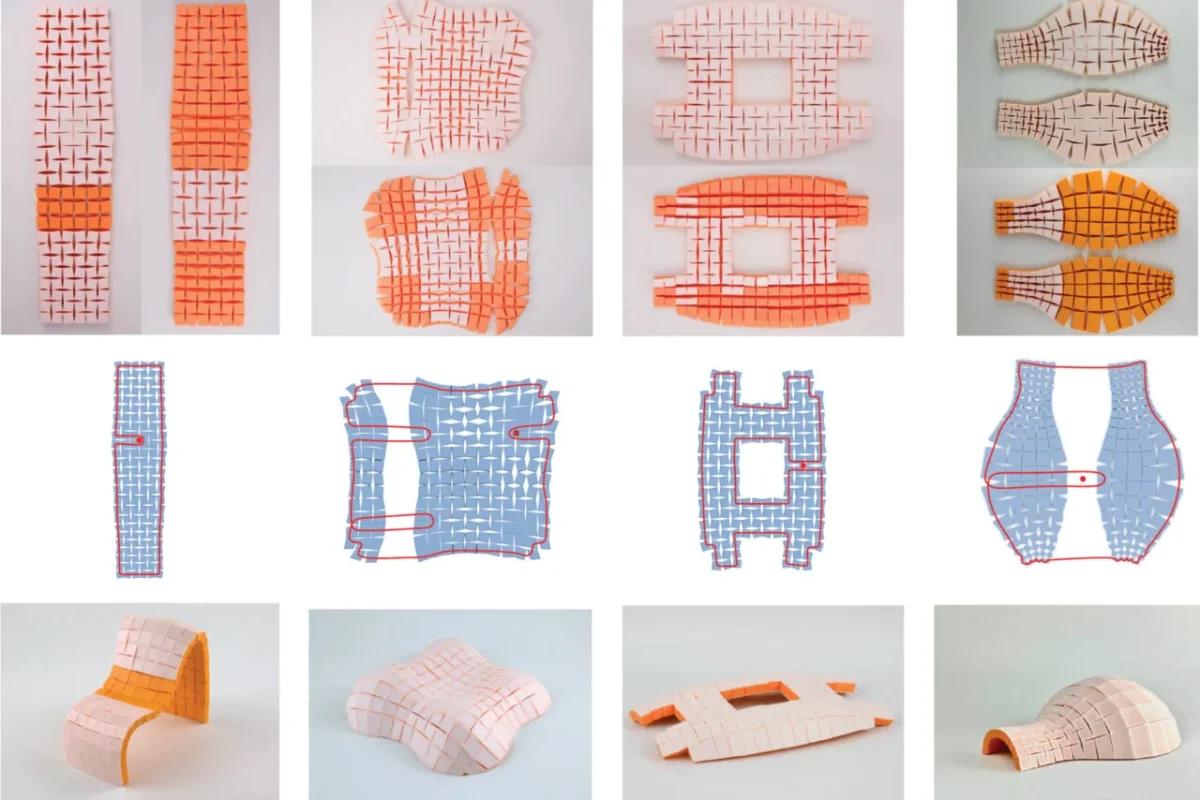

A new material developed by researchers at MIT's Computer Science and Artificial Intelligence Laboratory showcases innovative applications in various fields, including medical devices and robotics. Inspired by the Japanese art form of kirigami, this material can transform from a flat grid into three-dimensional structures with a simple pull of a string.
The process involves an algorithm that converts user-provided 3D designs into a flat arrangement of quadrilateral tiles. This method utilizes an auxetic mechanism, which allows the structure to become thicker when stretched and thinner when compressed. The algorithm optimizes the string path to ensure smooth transitions into the intended shapes.
Among the items created through this method are human-scale chairs and medical tools like splints. The researchers successfully tested a laser-cut plywood chair, which proved durable enough for actual use. While the technology shows promise, challenges remain for scaling it to larger architectural projects.