
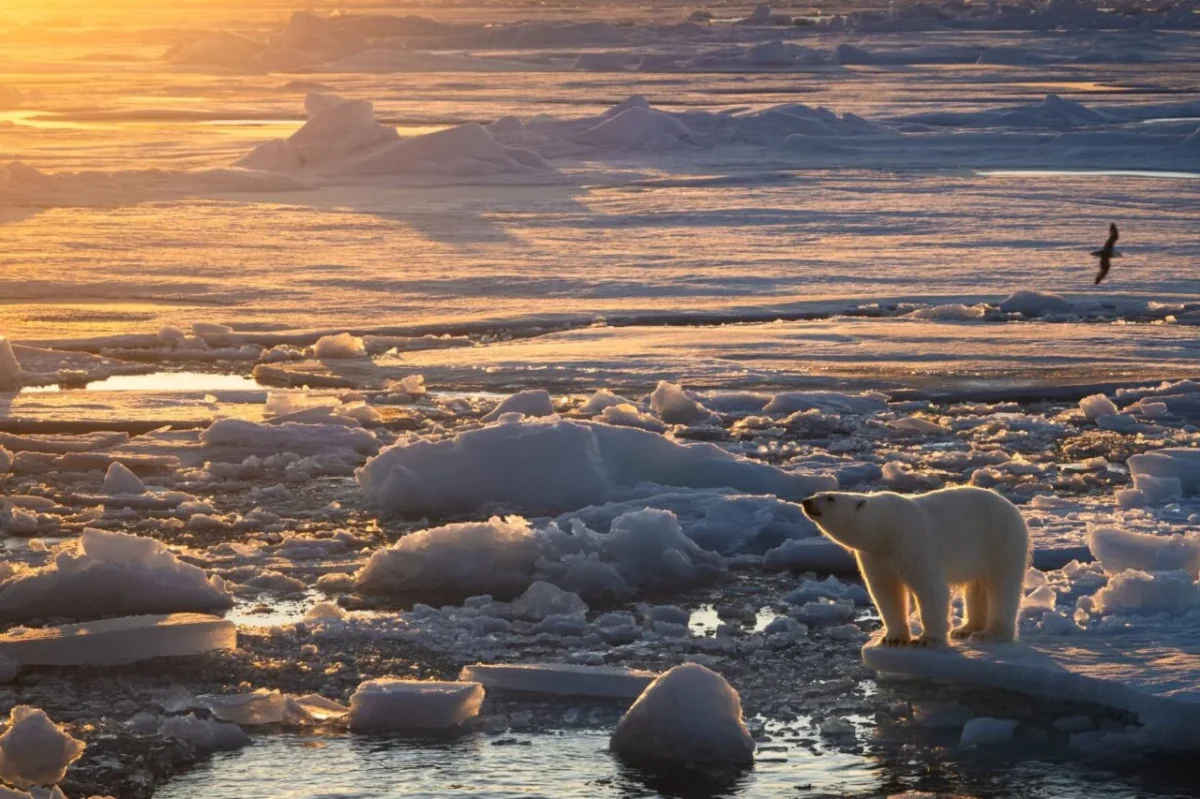

Despite significant losses in sea ice, the polar bear population in Svalbard remains resilient, with bears actually increasing their weight since 2000. Researchers estimate that around 300 polar bears inhabit the archipelago year-round, contributing to a stable population in a region that has seen up to 3.6 degrees Fahrenheit (2 degrees Celsius) increase in average temperature per decade. This surprising finding was published in the journal Scientific Reports and challenges assumptions about the impacts of climate change on this species.
Lead researcher Jon Aars from the Norwegian Polar Institute expressed his surprise at the results, noting that he expected the bears to be declining in both weight and population. The study, which analyzed data from 770 adult polar bears between 1992 and 2019, assessed their body composition in relation to the increasing number of ice-free days in the Barents Sea.
Previous studies indicated that the Barents Sea region has been losing sea ice habitat at a rate of four days annually from 1979 to 2014, more than any other polar bear habitat. Nevertheless, the population has remained stable, with a 2004 census estimating approximately 2,650 bears across the broader Barents Sea area.