
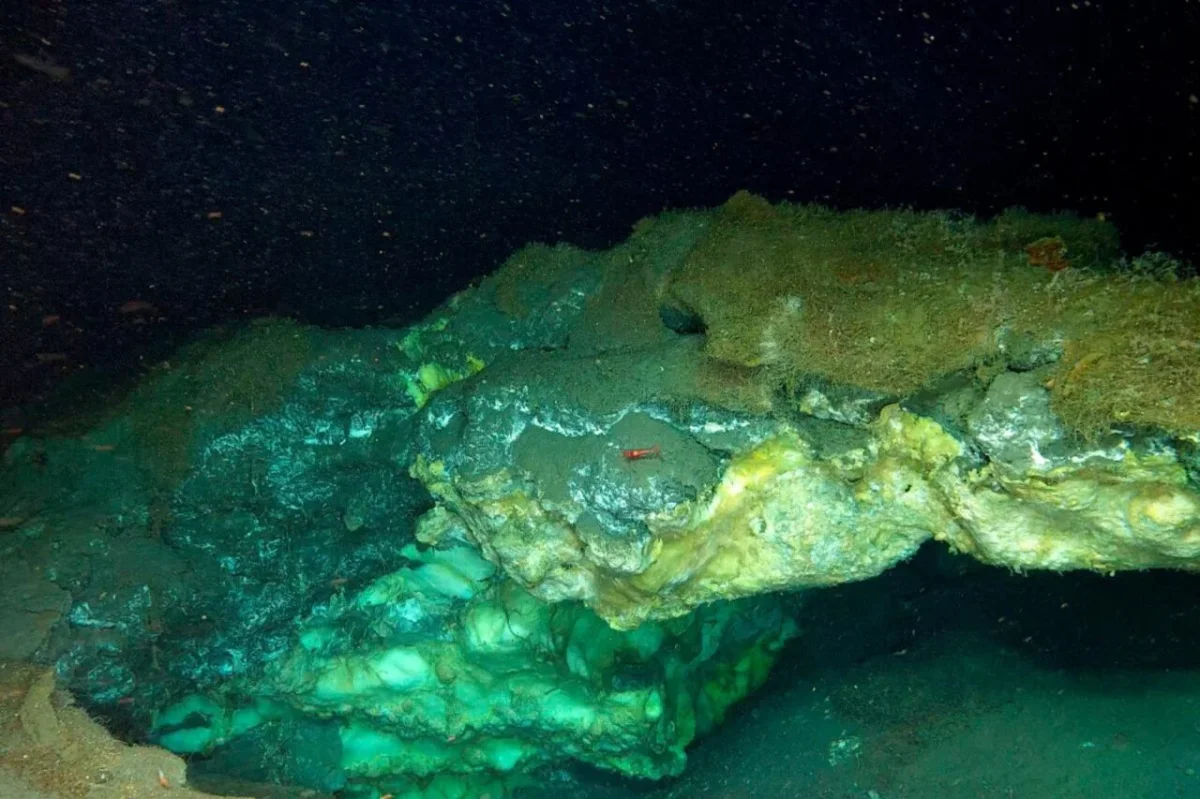

New Arctic Vent Discovery Reveals Thriving Ecosystem at Unprecedented Depths

New Arctic Vent Discovery Reveals Thriving Ecosystem at Unprecedented Depths

In May 2024, scientists uncovered the world's deepest gas hydrate at nearly 12,000 feet near Greenland, revealing insights into Arctic ecosystems and carbon cycling.

NeboAI I summarize the news with data, figures and context
IN 30 SECONDS

IN 1 SENTENCE

SENTIMENT
Neutral

𒀭
NeboAI is working, please wait...
Preparing detailed analysis
Quick summary completed
Extracting data, figures and quotes...
Identifying key players and context
DETAILED ANALYSIS
SHARE

NeboAI produces automated editions of journalistic texts in the form of summaries and analyses. Its experimental results are based on artificial intelligence. As an AI edition, texts may occasionally contain errors, omissions, incorrect data relationships and other unforeseen inaccuracies. We recommend verifying the content.

The discovery of the Freya Hydrate Mounds, located near Greenland, marks a significant milestone in deep-sea research. Found at a depth of nearly 12,000 feet (around 3,640 meters) during a May 2024 research cruise, these mounds represent the deepest gas hydrate cold seeps recorded to date. Researchers also observed a remarkable methane gas flare that reaches a height of 10,000 feet (approximately 3,300 meters), setting another record for deep-sea phenomena.

Giuliana Panieri, a geoscientist from Ca’ Foscari University in Italy and lead author of the study, emphasized the significance of this finding, stating that it "rewrites the playbook for Arctic deep-sea ecosystems and carbon cycling." Published in Nature Communications on December 17, the study reveals that these cold seeps, unlike hydrothermal vents that are short-lived, have the potential for long-term stability, allowing diverse marine life to thrive in their vicinity.

The Freya Mounds challenge previous understandings of hydrate formation, as researchers had not previously identified cold seeps at such profound depths. This discovery opens new avenues for exploring the geological dynamics and biological richness of the Arctic seafloor.

Want to read the full article? Access the original article with all the details.
Read Original Article
TL;DR

This article is an original summary for informational purposes. Image credits and full coverage at the original source. · View Content Policy

Editorial
Editorial Staff

Our editorial team works around the clock to bring you the latest tech news, trends, and insights from the industry. We cover everything from artificial intelligence breakthroughs to startup funding rounds, gadget launches, and cybersecurity threats. Our mission is to keep you informed with accurate, timely, and relevant technology coverage.

Press Enter to search or ESC to close