
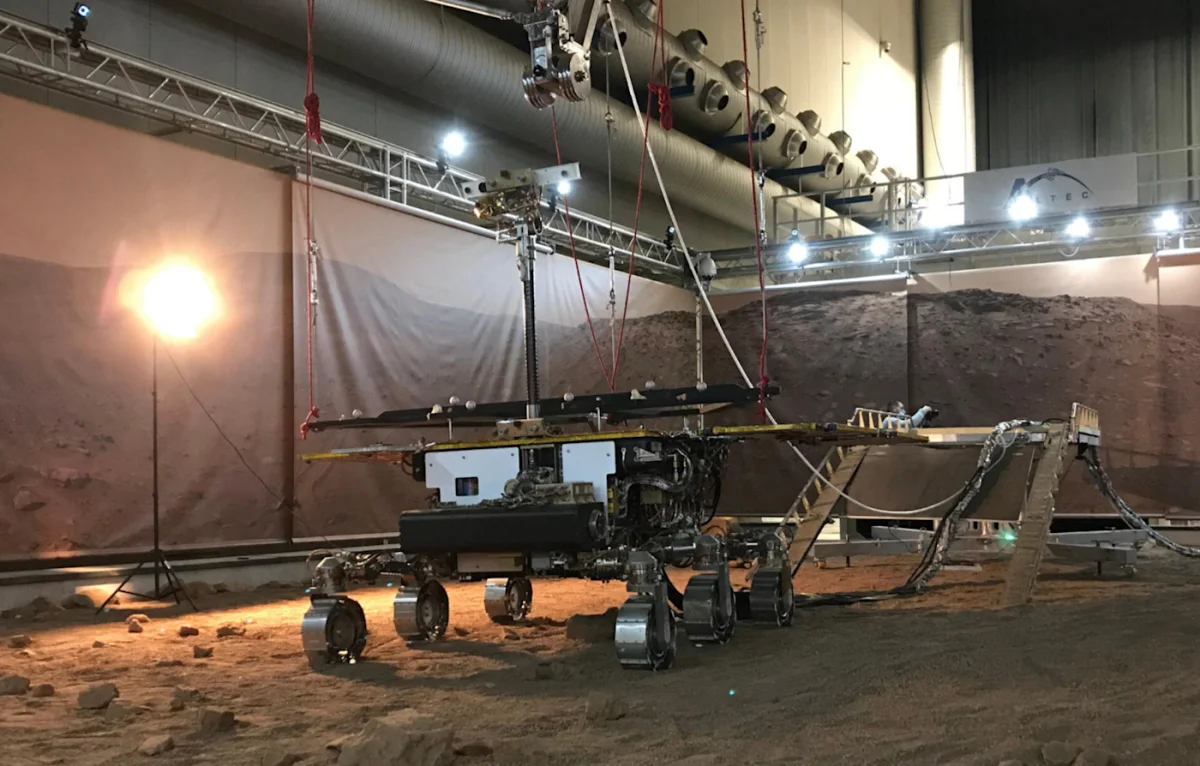

NASA has announced that the launch of the European Space Agency's (ESA) Rosalind Franklin rover is set for a future date, with plans to use a SpaceX Falcon Heavy rocket from the Kennedy Space Center. The mission, aimed at searching for signs of ancient life on Mars, is currently projected for no earlier than 2028.
This collaboration between NASA and the ESA involves the European agency supplying the rover, spacecraft, and lander. NASA will contribute braking engines for the lander along with heater units for the rover's systems, and will assist with the launch.
The rover is equipped with advanced scientific tools, including a mass spectrometer and an organic molecule analyzer, designed to analyze samples from the Oxia Planum landing site. This project has faced numerous delays since its inception in 2001, with the original launch date set for 2009. Budget constraints and geopolitical issues have impacted progress, particularly after ESA's partnership with Russia was suspended in 2022.
Current budget proposals from the administration suggest significant cuts to NASA's science funding, amidst ongoing challenges related to the mission's timeline. Despite these obstacles, there remains hope for the successful launch in 2028.