
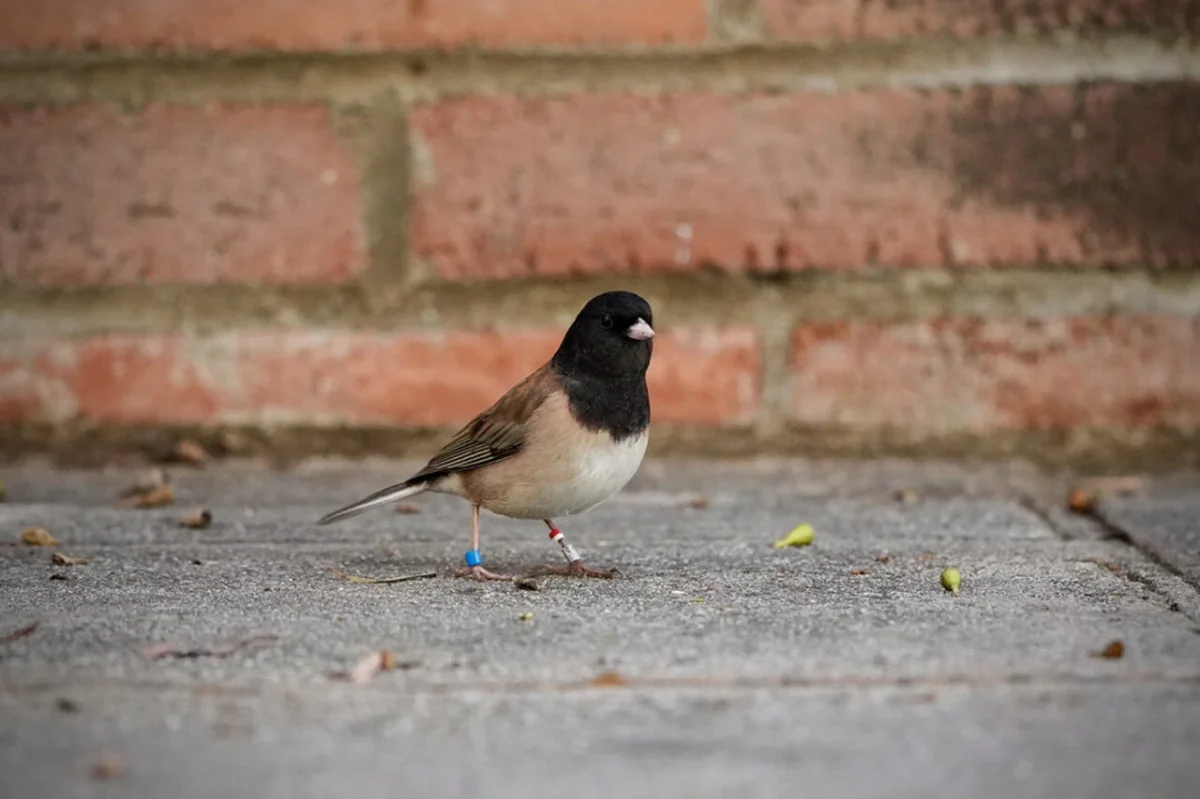

The dark-eyed junco, a small songbird, underwent significant evolutionary changes during the COVID-19 pandemic, as reported by researchers in a recent study published in the Proceedings of the National Academy of Sciences. Notably, these birds experienced a rapid alteration in their beak size, which lengthened during the pandemic and reverted to shorter forms as human activity resumed.
Researchers from the University of California, Los Angeles (UCLA) and Bard College observed that these birds adapted to urban environments, where they foraged on food scraps left by humans. This behavior led to a diet that included items like cookies and pizza, mirroring the eating habits of college students. Pamela Yeh, an evolutionary biologist at UCLA, highlighted the remarkable speed at which evolution can occur, particularly in response to human influences.
Before the pandemic, dark-eyed juncos typically inhabited mountain forests. However, climate change had already driven many into urban settings, where their beaks evolved to become shorter and more suited for scavenging. The study, initiated in 2018, emphasizes the direct impact of human presence on wildlife adaptation.