
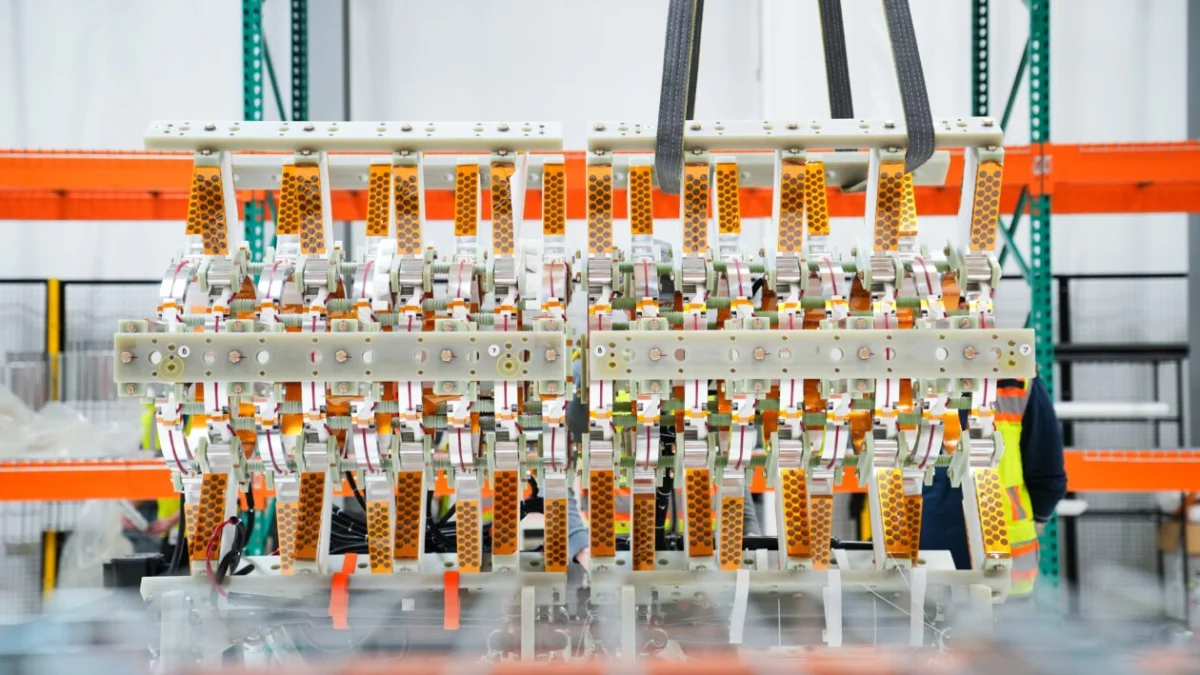

Helion Energy is developing a compact fusion device named Tiny Merge, designed to expedite the testing of its fusion technology. This new machine is less than one-eighth the size of the company's previous prototype, Polaris, which is classified as its seventh-generation device.
The company faces a pressing deadline, as it is required to establish a commercial fusion energy facility by 2028. This commitment necessitates addressing unresolved technical challenges that have persisted despite the advancements made with larger prototypes. Michael Hua, Helion's senior director of radiation safety and nuclear science, emphasized that the new testbed allows for faster iterations with reduced resource demands.
Located in Everett, Washington, the R&D facility features the nearly eight-foot-long Tiny Merge, which is currently under construction. The device will eventually be equipped with numerous mini-fridge-sized capacitors to manage the power flow. Helion aims to operationalize Tiny Merge by the end of summer, providing a two-year window to refine its designs based on the insights gained.
In addition, Helion has initiated work on a new facility named Orion in Eastern Washington, which is intended to be the first to generate fusion energy at a commercial scale, marking a significant milestone in the quest for sustainable energy.