
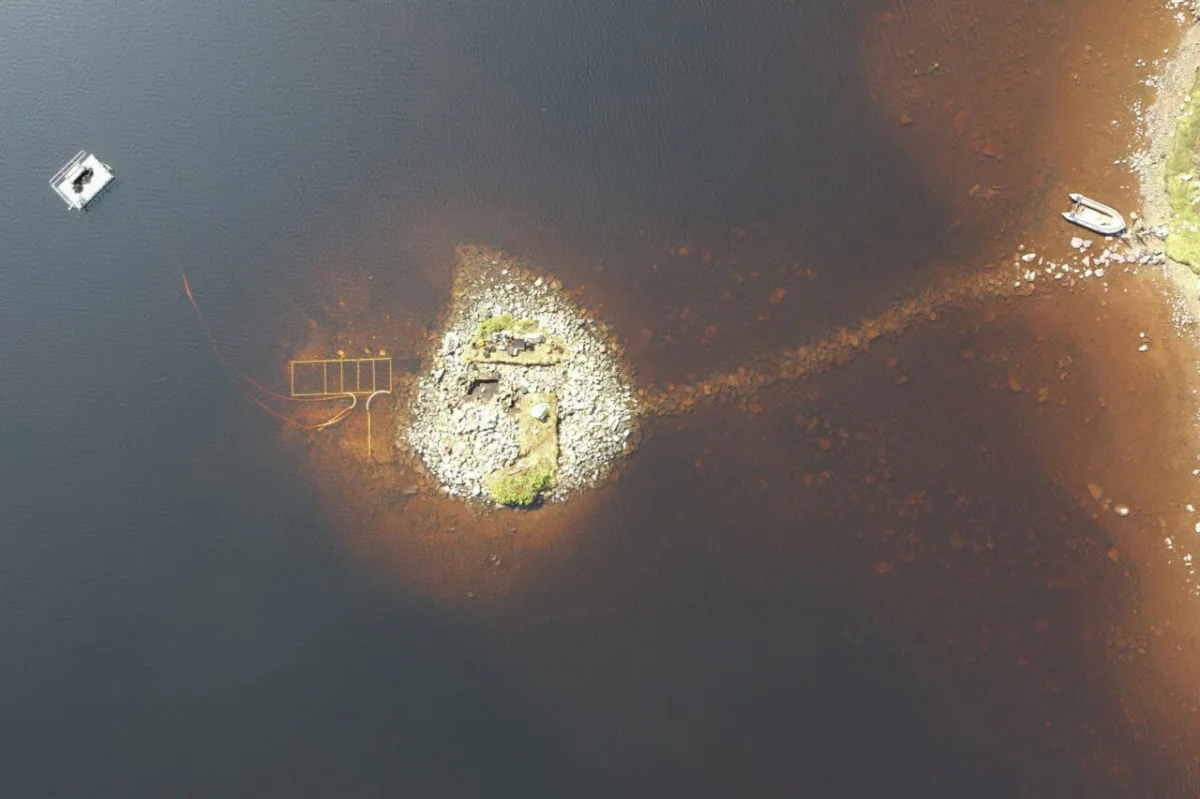

Recent research has revealed that some crannogs, artificial islands found beneath Scottish waters, date back over 5,000 years, aligning their age with historically significant sites like Stonehenge. A team of archaeologists from the University of Southampton utilized an innovative method called stereophotogrammetry to explore these submerged structures, enhancing the precision of their investigations.
While crannogs have long been thought to have been primarily constructed between the Iron Age and the post-medieval period, these findings suggest they were built much earlier than previously assumed. Since around 2021, the project titled Islands of Stone has focused on the Outer Hebrides, home to a notable concentration of crannogs, with 170 out of 550 known sites in Scotland.
The research team faced significant challenges in studying these underwater sites, as traditional terrestrial methods do not apply in aquatic environments. The authors noted that the crannogs provide crucial insights into past human activities and environmental changes, highlighting the complexity of the communities that built them.