
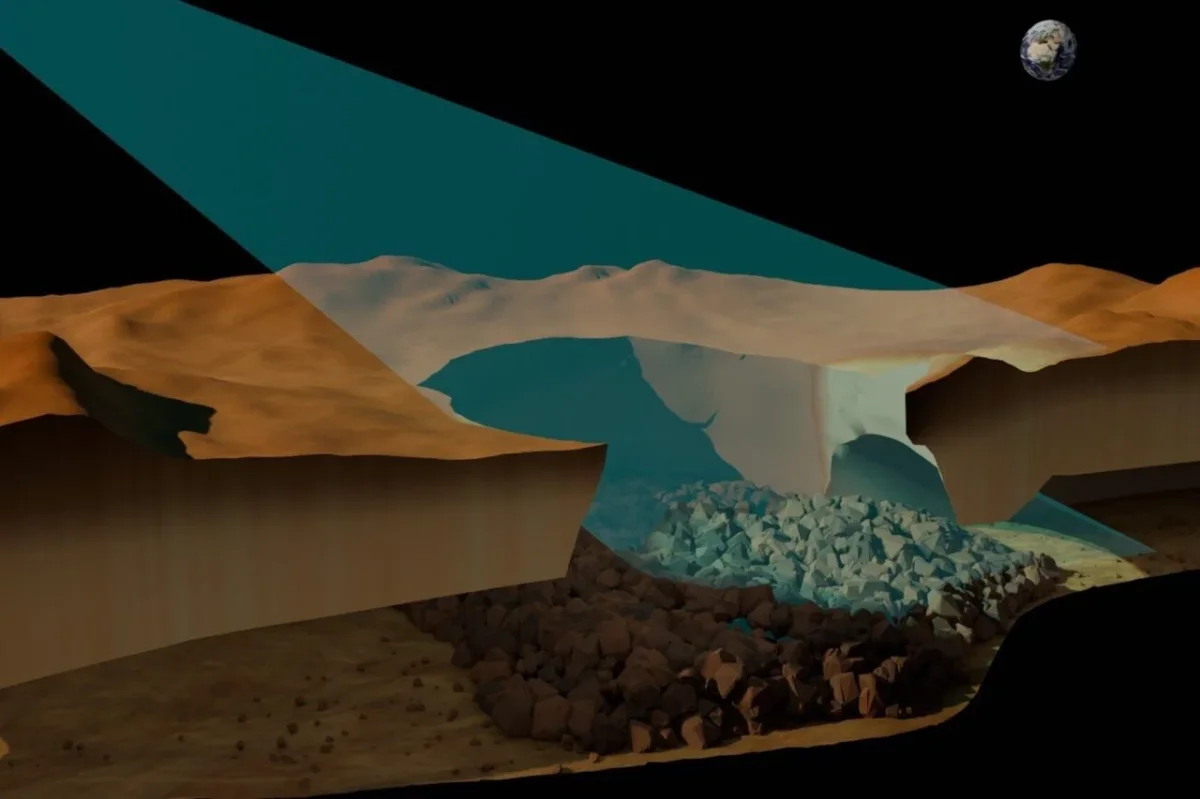

Recent research has identified what appears to be the first underground lava tube on Venus, marking a significant milestone in our understanding of the planet's volcanic history. A research team from the University of Trento analyzed data from the Magellan mission, which mapped Venus' surface using synthetic aperture radar between 1990 and 1992. Their findings indicate a subsurface feature located near the Nux Mons volcano.
The detected lava tube measures approximately 0.6 miles (or 1 kilometer) in width and possesses a roof thickness of about 490 feet (approximately 150 meters). Notably, the cavity within the tube reaches a height of at least 0.25 miles (or 375 meters). This discovery supports long-standing hypotheses regarding the existence of a vast network of underground features formed by ancient volcanic activity.
According to Lorenzo Bruzzone, a co-author of the study, the confirmation of a volcanic cavity on Venus opens up new avenues for research and enhances our understanding of the processes that have influenced the planet's geological landscape. Such findings are crucial, as they allow scientists to validate theories that have existed for many years without direct observational evidence.