
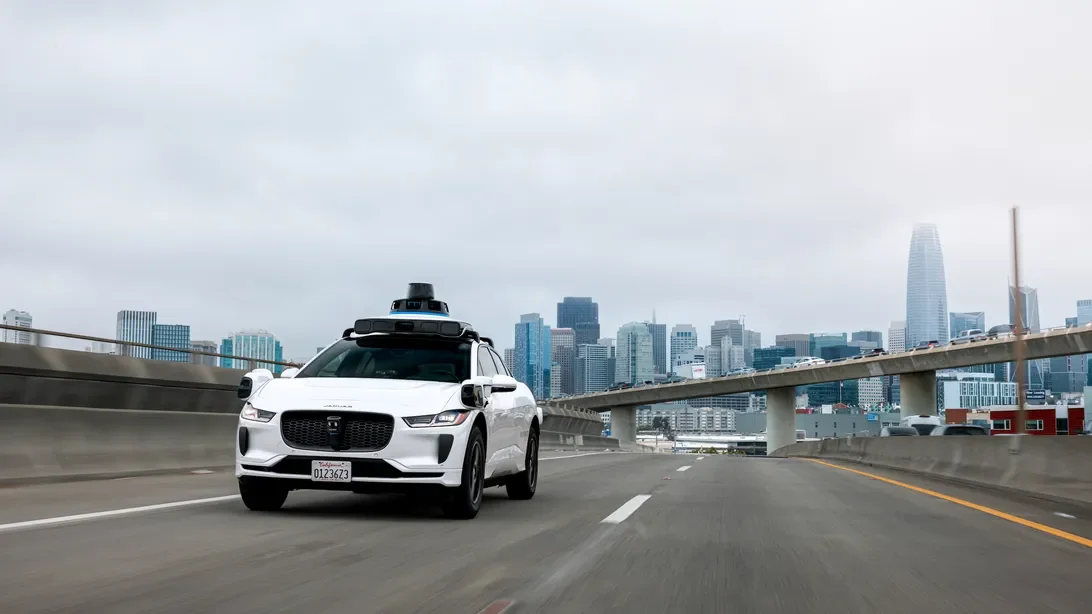

California's New Law on Driverless Cars Could Transform Traffic Enforcement Rules

California's New Law on Driverless Cars Could Transform Traffic Enforcement Rules

California's DMV mandates ticketing for autonomous vehicles lacking human drivers, holding manufacturers accountable as they implement new safety regulations for 2024.

NeboAI I summarize the news with data, figures and context
IN 30 SECONDS

IN 1 SENTENCE

SENTIMENT
Neutral

𒀭
NeboAI is working, please wait...
Preparing detailed analysis
Quick summary completed
Extracting data, figures and quotes...
Identifying key players and context
DETAILED ANALYSIS
SHARE

NeboAI produces automated editions of journalistic texts in the form of summaries and analyses. Its experimental results are based on artificial intelligence. As an AI edition, texts may occasionally contain errors, omissions, incorrect data relationships and other unforeseen inaccuracies. We recommend verifying the content.

The California Department of Motor Vehicles has introduced new regulations impacting autonomous vehicles, including those operated by companies like Tesla and Waymo. Effective with the 2024 legislation, these vehicles can now receive tickets for traffic violations, even without a human driver present. The citation will be issued as a "notice of AV noncompliance" directed at the vehicle's manufacturer.

This regulatory update was approved on April 28 and aims to enhance public safety and accountability within the autonomous vehicle industry, according to DMV director Steve Gordon. Additional stipulations require extensive testing before deployment, mandating 50,000 miles for light-duty vehicles and 500,000 miles for heavy-duty vehicles such as semi-trucks.

Concerns have been raised regarding the interactions between law enforcement and autonomous vehicles, particularly highlighted by incidents involving Waymo cars, which stalled during a power outage in San Francisco and blocked emergency services during a crisis in Texas. The new rules clarify how citations will be processed, removing previous ambiguities about responsibility for traffic violations.

Industry experts emphasize that these updates could foster better compliance and safety data sharing among manufacturers, which have traditionally been reluctant to disclose information. Despite concerns, it has been noted that most autonomous vehicles operate cautiously and infrequently cause accidents.

Want to read the full article? Access the original article with all the details.
Read Original Article
TL;DR

This article is an original summary for informational purposes. Image credits and full coverage at the original source. · View Content Policy

Editorial
Editorial Staff

Our editorial team works around the clock to bring you the latest tech news, trends, and insights from the industry. We cover everything from artificial intelligence breakthroughs to startup funding rounds, gadget launches, and cybersecurity threats. Our mission is to keep you informed with accurate, timely, and relevant technology coverage.

Press Enter to search or ESC to close