
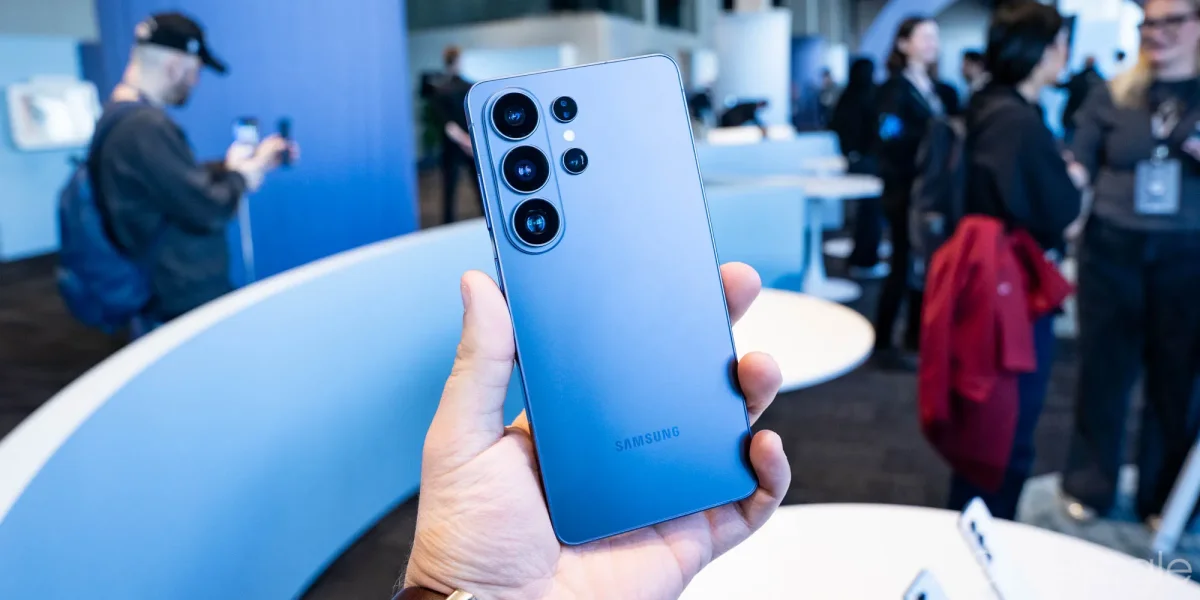

Samsung’s decision to omit Qi2 magnets in Galaxy S26 raises concerns over user convenience

Samsung’s decision to omit Qi2 magnets in Galaxy S26 raises concerns over user convenience

Samsung's Galaxy S26 series lacks built-in Qi2 magnets, impacting wireless charging speeds. Users must purchase compatible cases to access 25W charging, complicating usability.

NeboAI I summarize the news with data, figures and context
IN 30 SECONDS

IN 1 SENTENCE

SENTIMENT
Neutral

𒀭
NeboAI is working, please wait...
Preparing detailed analysis
Quick summary completed
Extracting data, figures and quotes...
Identifying key players and context
DETAILED ANALYSIS
SHARE

NeboAI produces automated editions of journalistic texts in the form of summaries and analyses. Its experimental results are based on artificial intelligence. As an AI edition, texts may occasionally contain errors, omissions, incorrect data relationships and other unforeseen inaccuracies. We recommend verifying the content.

The absence of built-in Qi2 magnets in Samsung's new Galaxy S26 series has drawn attention, particularly concerning the device's charging capabilities. Samsung attributes this decision to its focus on producing thinner and lighter designs, which they claim is part of their engineering strategy. While the models support Qi2-compatible cases, users must purchase these separately to utilize the enhanced wireless charging speeds introduced in the Galaxy S26+ and Galaxy S26 Ultra.

Without integrated magnets, customers will struggle to benefit from the 25W charging speed, as the current Qi specification requires magnetic alignment for such rates. This limitation raises questions about user experience, as Samsung's first-party chargers also rely on magnetic alignment, complicating the charging process for those without compatible cases. The shift to "Qi2 Ready" has effectively offloaded the responsibility of magnetic alignment to third-party cases, which may not always include this feature, leading to inconsistency in user experience.

Despite the advancements in design, the reliance on external cases for optimal functionality may hinder the overall appeal of the Galaxy S26 series, as consumers weigh the benefits of sleekness against the practicalities of charging efficiency.

Want to read the full article? Access the original article with all the details.
Read Original Article
TL;DR

This article is an original summary for informational purposes. Image credits and full coverage at the original source. · View Content Policy

Editorial
Editorial Staff

Our editorial team works around the clock to bring you the latest tech news, trends, and insights from the industry. We cover everything from artificial intelligence breakthroughs to startup funding rounds, gadget launches, and cybersecurity threats. Our mission is to keep you informed with accurate, timely, and relevant technology coverage.

Press Enter to search or ESC to close