
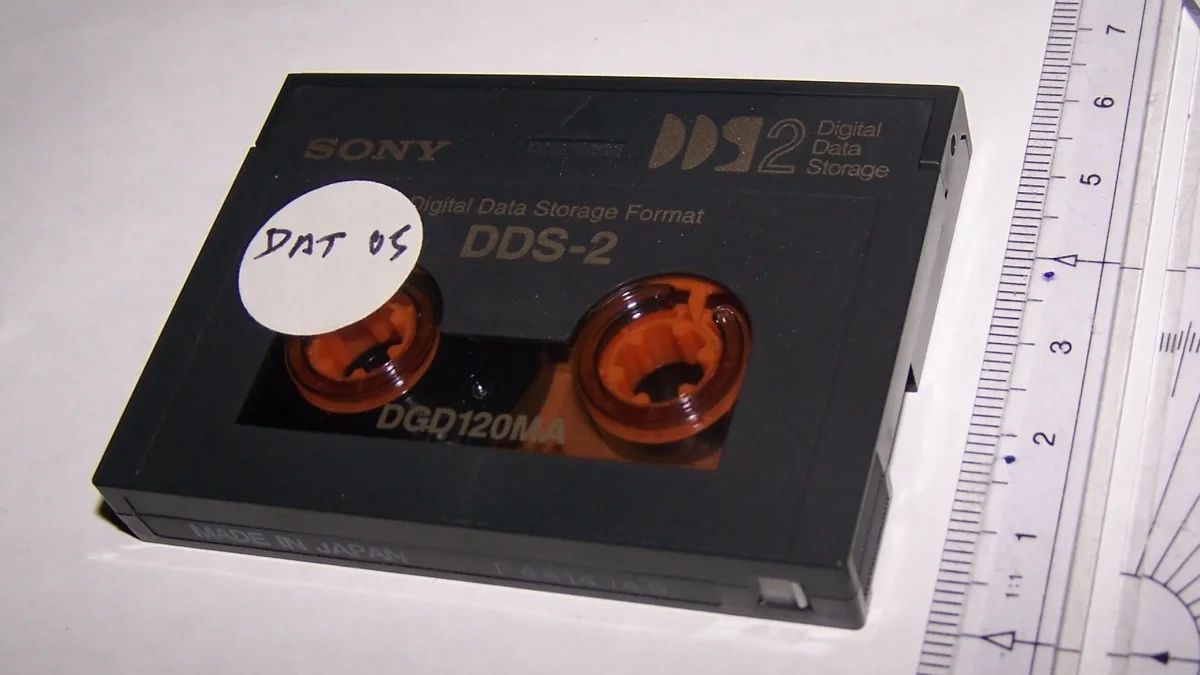

In the 1990s and early 2000s, Digital Audio Tape (DAT) and Digital Data Storage (DDS) tapes were common for data backups in offices and studios, though they rarely found use in homes. These tapes, with their 4mm cassette format, became essential for many organizations needing to secure their information before the rise of modern cloud solutions.
Backing up data involved connecting a DDS tape drive to a computer or server, often through SCSI, and utilizing backup software that scheduled data transfers. Users would typically run these processes overnight, whereupon the next day, someone would manage the tapes by labeling and swapping them as needed.
Despite their now outdated technology, tape backups offered significant advantages at the time. They were cost-effective, compact, and allowed for offline data storage, which helped mitigate risks associated with data loss. With the absence of cloud storage, having physical copies of data was a practical solution.
Though tapes like DAT and DDS are now largely absent, they played a crucial role in the evolution of data management practices, demonstrating a unique approach to data security in an era before digital solutions became widely available.