
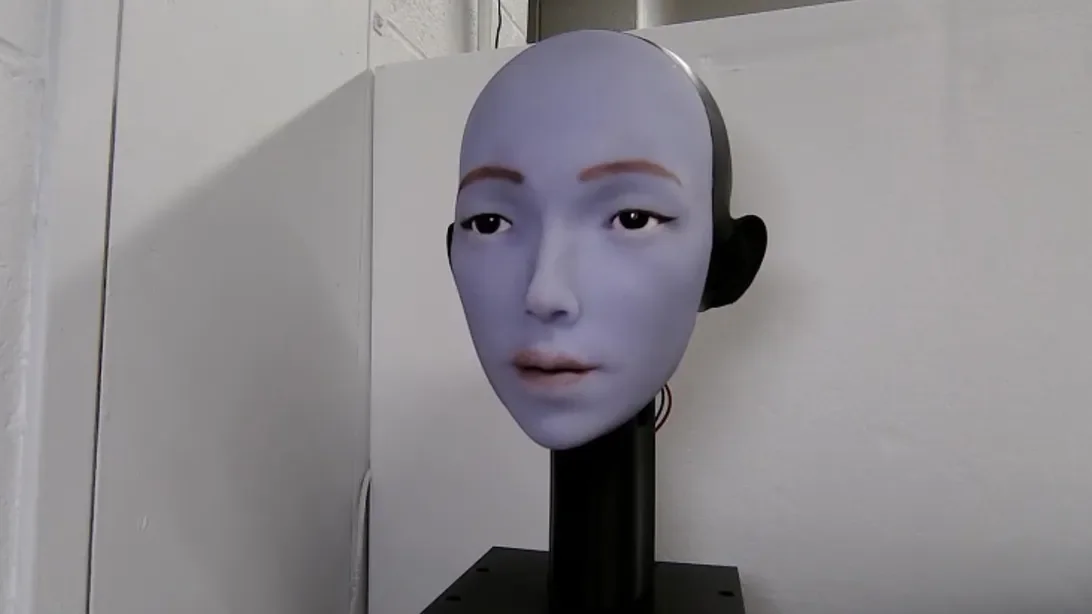

The recent research from Columbia University addresses a significant challenge in robotics, particularly concerning humanoid robots designed to engage with humans. In an effort to mitigate the discomfort often felt when encountering robots that resemble people, known as the uncanny valley, the research team has developed a method to synchronize lip movements with speech. This innovation is led by engineering professor Hod Lipson, who emphasized the need for more realistic lip movements in robotic communication.
Presented last Wednesday, the study aims to enhance the realism of robot interactions, which is increasingly important as interest in consumer robotics grows. The recent CES 2026 showcased a variety of humanoid robots equipped with features mimicking human characteristics, such as synthetic skin and expressive faces.
The Columbia team's technique involves creating a humanoid robot face capable of both talking and singing, focusing on how sounds correspond to lip movements. Achieving accurate synchronization can profoundly influence whether humans feel comfortable forming emotional connections with these machines. As robotics technology advances, ensuring that robots communicate naturally may foster greater acceptance of their roles in daily life.