
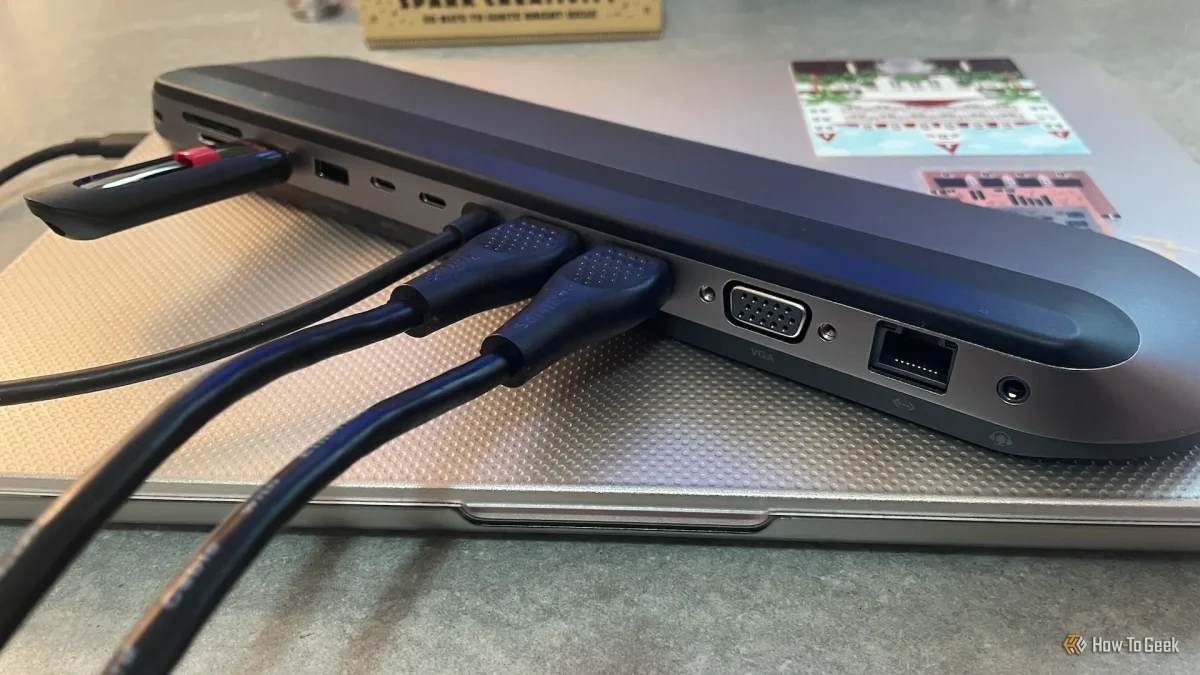

Despite advancements in technology, the functionality of USB-C docking stations remains limited as of 2026, leaving users facing compatibility issues and performance challenges. The concept of a "universal" dock does not hold up under scrutiny, as the USB-C connector merely represents a physical interface rather than a guarantee of operational capabilities.
USB-C ports vary significantly; some are restricted to basic data transfer while others support additional modes necessary for video output. Consequently, when utilizing a high-end dock, its capabilities may be rendered ineffective if the host computer lacks support for the required protocols. Furthermore, the claim of universal power delivery is misleading, as many high-performance devices require proprietary signals that standard docks cannot provide.
Additionally, the aspiration to connect multiple accessories through daisy chaining with USB-C is challenging for most users. Standard USB-C docks do not allow for seamless integration of additional hubs or high-speed storage devices, often resulting in connectivity issues and reduced performance. This is particularly evident when attempting to expand setups without the benefits of Thunderbolt technology, which offers improved data handling and power management.