
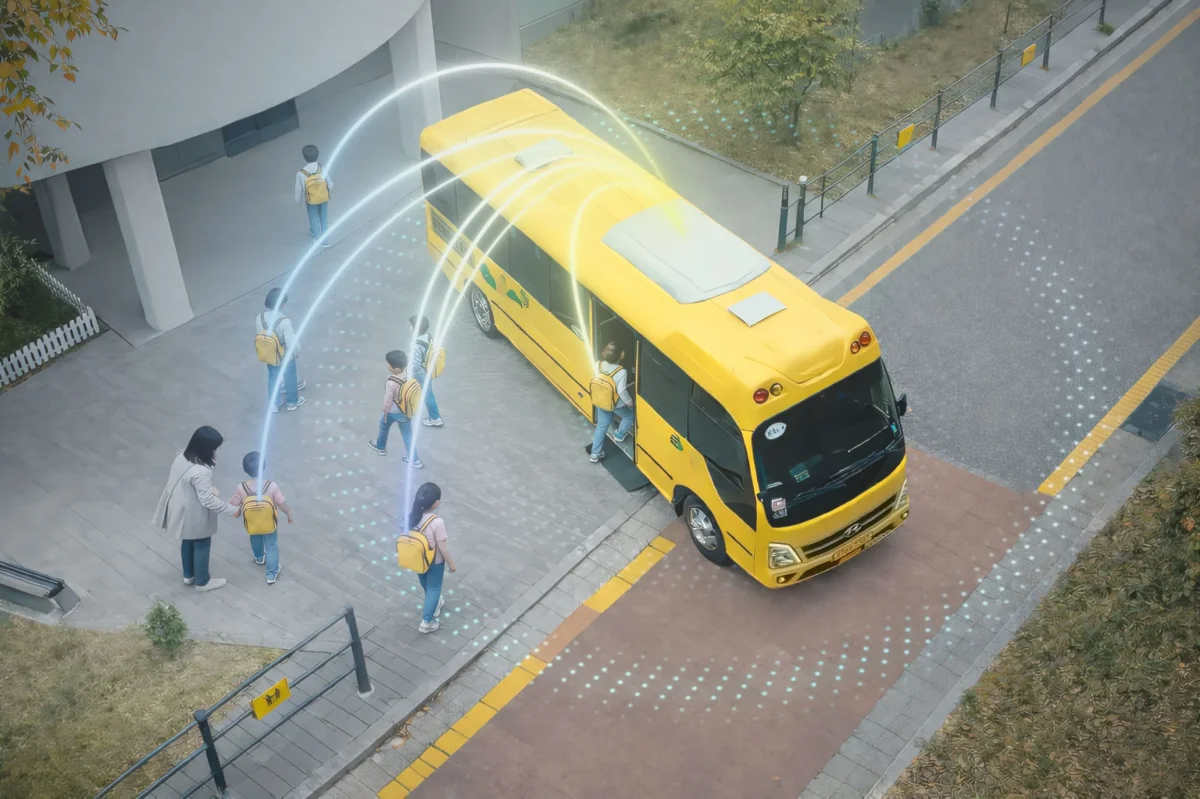

Hyundai and Kia's new tech offers critical safety boost for school zones

Hyundai and Kia's new tech offers critical safety boost for school zones

In 2021, 20% of nearly 43,000 U.S. road fatalities involved vulnerable users. Hyundai and Kia's Vision Pulse tech aims to drastically enhance safety with real-time alerts, potentially reducing crashes by 80%.

NeboAI I summarize the news with data, figures and context
IN 30 SECONDS

IN 1 SENTENCE

SENTIMENT
Neutral

𒀭
NeboAI is working, please wait...
Preparing detailed analysis
Quick summary completed
Extracting data, figures and quotes...
Identifying key players and context
DETAILED ANALYSIS
SHARE

NeboAI produces automated editions of journalistic texts in the form of summaries and analyses. Its experimental results are based on artificial intelligence. As an AI edition, texts may occasionally contain errors, omissions, incorrect data relationships and other unforeseen inaccuracies. We recommend verifying the content.

In 2021, vulnerable road users, including pedestrians, cyclists, and wheelchair users, accounted for about 20% of the 42,915 motor vehicle fatalities in the United States. The prevalence of distracted driving and speeding significantly contributes to these alarming statistics, particularly in high-risk areas, such as school zones.

Hyundai and Kia have introduced a new safety technology known as Vision Pulse, which utilizes ultra-wideband (UWB) signals to enhance the detection of these vulnerable individuals on the road. When a vulnerable road user is identified, the system alerts the driver, enabling them to take necessary precautions. A demonstration video on Hyundai’s YouTube channel illustrates how this technology can inform school bus operators of a child's precise location.

Part of the broader V2X (vehicle-to-everything) framework, Vision Pulse aims to improve safety by facilitating communication between vehicles and their surroundings. This technology allows drivers and vulnerable road users to be aware of each other's presence, potentially preventing accidents. While Hyundai and Kia are assessing the technology's readiness for mass production, the integration of UWB modules in their vehicles could pave the way for safer roads.

Want to read the full article? Access the original article with all the details.
Read Original Article
TL;DR

This article is an original summary for informational purposes. Image credits and full coverage at the original source. · View Content Policy

Editorial
Editorial Staff

Our editorial team works around the clock to bring you the latest tech news, trends, and insights from the industry. We cover everything from artificial intelligence breakthroughs to startup funding rounds, gadget launches, and cybersecurity threats. Our mission is to keep you informed with accurate, timely, and relevant technology coverage.

Press Enter to search or ESC to close