
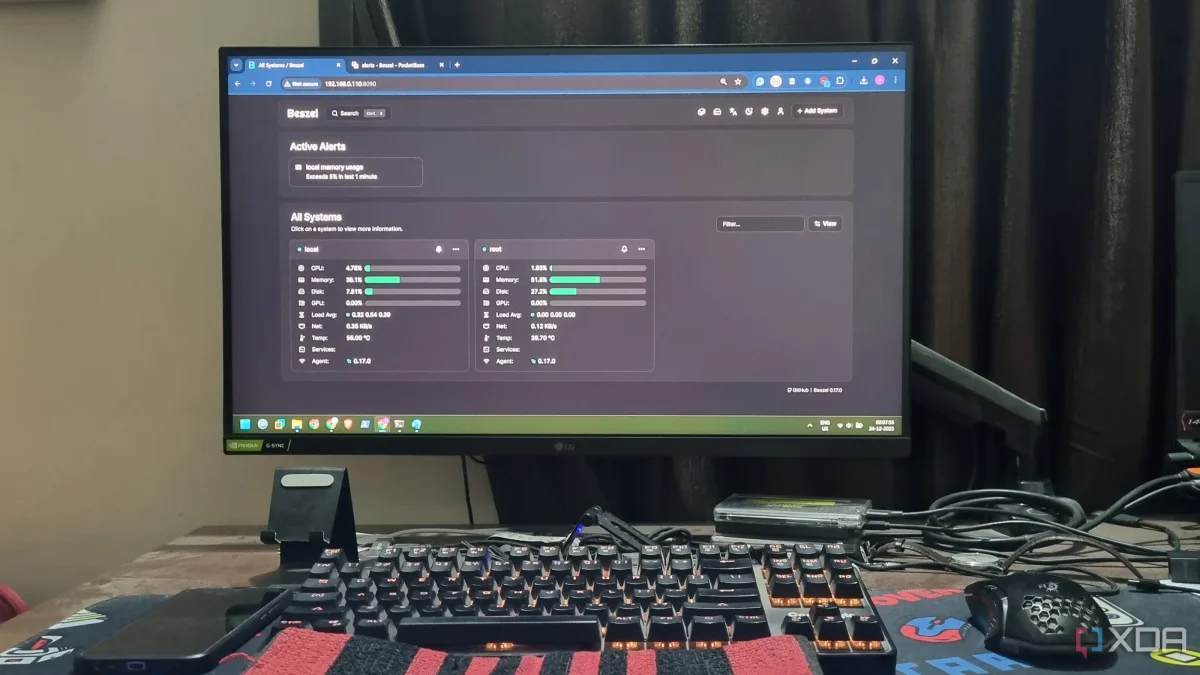

How Beszel Transformed My Docker Monitoring: 3 Key Takeaways for Users

How Beszel Transformed My Docker Monitoring: 3 Key Takeaways for Users

Beszel simplifies Docker monitoring by tracking resource usage across multiple devices, allowing users to manage numerous containers without complex setups. Discover its advantages.

NeboAI I summarize the news with data, figures and context
IN 30 SECONDS

IN 1 SENTENCE

SENTIMENT
Neutral

𒀭
NeboAI is working, please wait...
Preparing detailed analysis
Quick summary completed
Extracting data, figures and quotes...
Identifying key players and context
DETAILED ANALYSIS
SHARE

NeboAI produces automated editions of journalistic texts in the form of summaries and analyses. Its experimental results are based on artificial intelligence. As an AI edition, texts may occasionally contain errors, omissions, incorrect data relationships and other unforeseen inaccuracies. We recommend verifying the content.

The introduction of Beszel, a lightweight monitoring tool, has transformed the management of Docker containers for users in self-hosted environments. While traditional tools like Uptime Kuma provide basic status notifications, they fall short in monitoring hardware resource consumption, which is crucial for efficient management of multiple containers. Beszel addresses this gap with an easy deployment process and seamless integration with Docker setups.

Users can configure Beszel with minimal effort, requiring only the hostname, IP address, and port to track Docker activity. Once operational, it generates a Docker compose file to facilitate additional agent creation, allowing comprehensive monitoring without cumbersome setup. This efficiency is particularly beneficial for users managing numerous devices, such as Raspberry Pi and older laptops, running various applications including Omni tools and NextCloud.

Compared to Uptime Kuma, which demands individual container monitoring and manual configuration, Beszel offers a straightforward approach that allows users to integrate new machines into their home systems effortlessly. This advancement streamlines the process of overseeing resource usage and container status, making it a valuable asset for anyone utilizing Docker.

Want to read the full article? Access the original article with all the details.
Read Original Article
TL;DR

This article is an original summary for informational purposes. Image credits and full coverage at the original source. · View Content Policy

Editorial
Editorial Staff

Our editorial team works around the clock to bring you the latest tech news, trends, and insights from the industry. We cover everything from artificial intelligence breakthroughs to startup funding rounds, gadget launches, and cybersecurity threats. Our mission is to keep you informed with accurate, timely, and relevant technology coverage.

Press Enter to search or ESC to close