
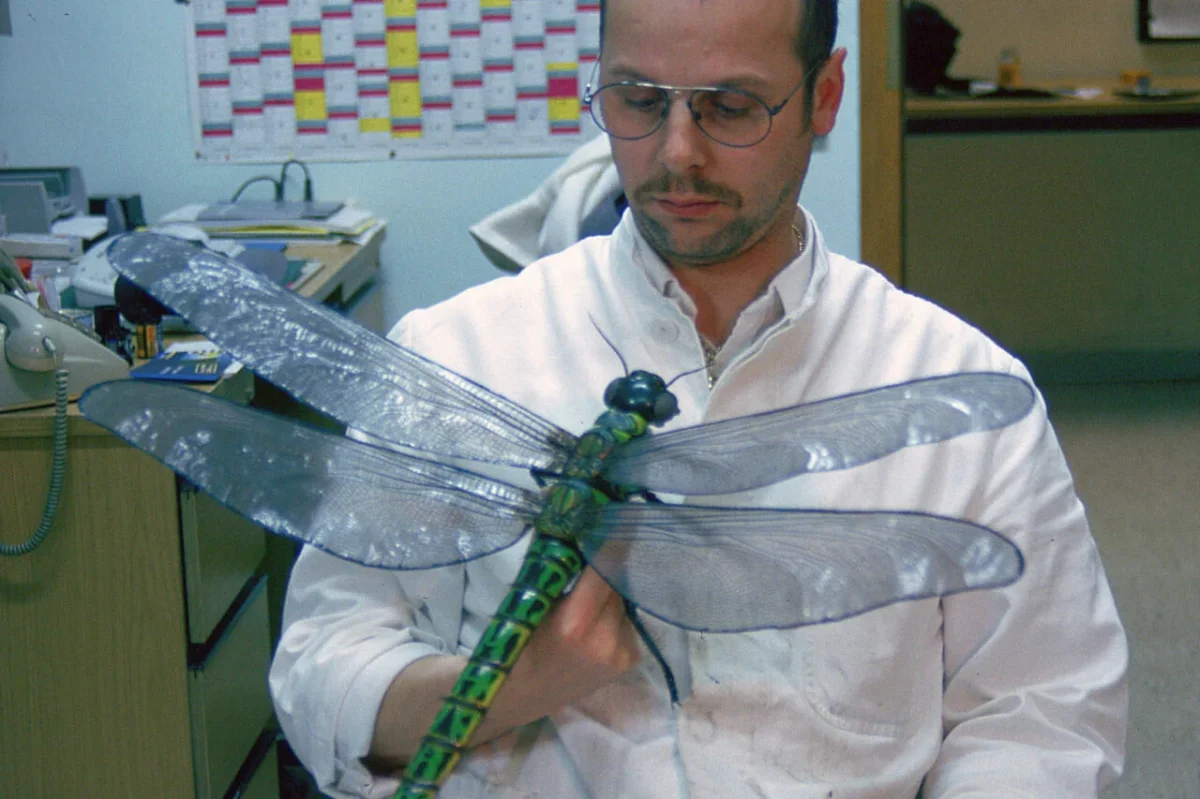

A recent study challenges the long-held belief that high atmospheric oxygen levels were essential for the giant sizes of ancient insects like the griffinfly, which had wingspans of about 27 inches (70 centimeters). Published in a reputable journal, this new research suggests that the flight muscles of insects may not be limited by oxygen levels in the atmosphere, potentially overturning a theory that dominated for over 30 years.
The study indicates that insects today could theoretically achieve sizes similar to those in the past, raising questions about why such large insects do not exist in the current environment. Researchers point out that the griffinfly thrived during a time when Earth’s oxygen levels were approximately 9% higher than today, leading to assumptions about a direct relationship between oxygen and insect size.
The findings highlight the unique tracheal system of insects, which allows them to transport oxygen efficiently to their flight muscles through a network of air-filled tubes. This biological mechanism suggests that insects might meet their oxygen requirements independently, irrespective of atmospheric conditions.