
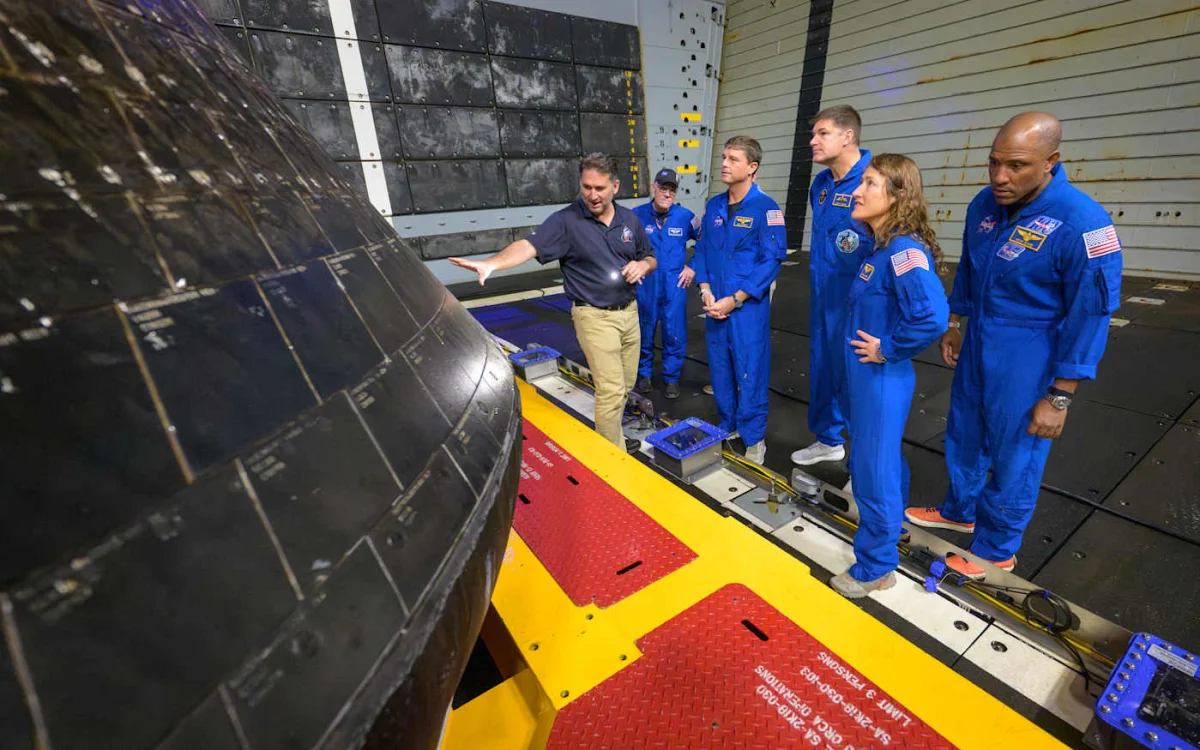

NASA has initiated a thorough analysis of its systems following the successful return of the Artemis II mission, which took four astronauts to the moon and back earlier this month. This mission not only marked a significant milestone in human space exploration but also served as a critical test for future crewed lunar missions planned for 2027 and 2028. Early assessments indicate that both the Orion spacecraft and the SLS rocket performed satisfactorily, with the Orion's heat shield showing less char loss than during the uncrewed Artemis I mission.
Orion successfully splashed down, landing merely 2.9 miles from its intended target, and achieved an entry velocity that was within one mile-per-hour of predictions. The SLS rocket also demonstrated strong performance, reaching speeds exceeding 18,000 miles per hour at engine cutoff, which was crucial for orbital insertion. However, the mission faced challenges with the toilet system, leading to troubleshooting by astronaut Christina Koch and ground support.
As NASA addresses these issues, the Artemis II crew continues to share their experiences, including stunning visuals of the Earth setting behind the moon, a sight not witnessed by humans for over 50 years.