
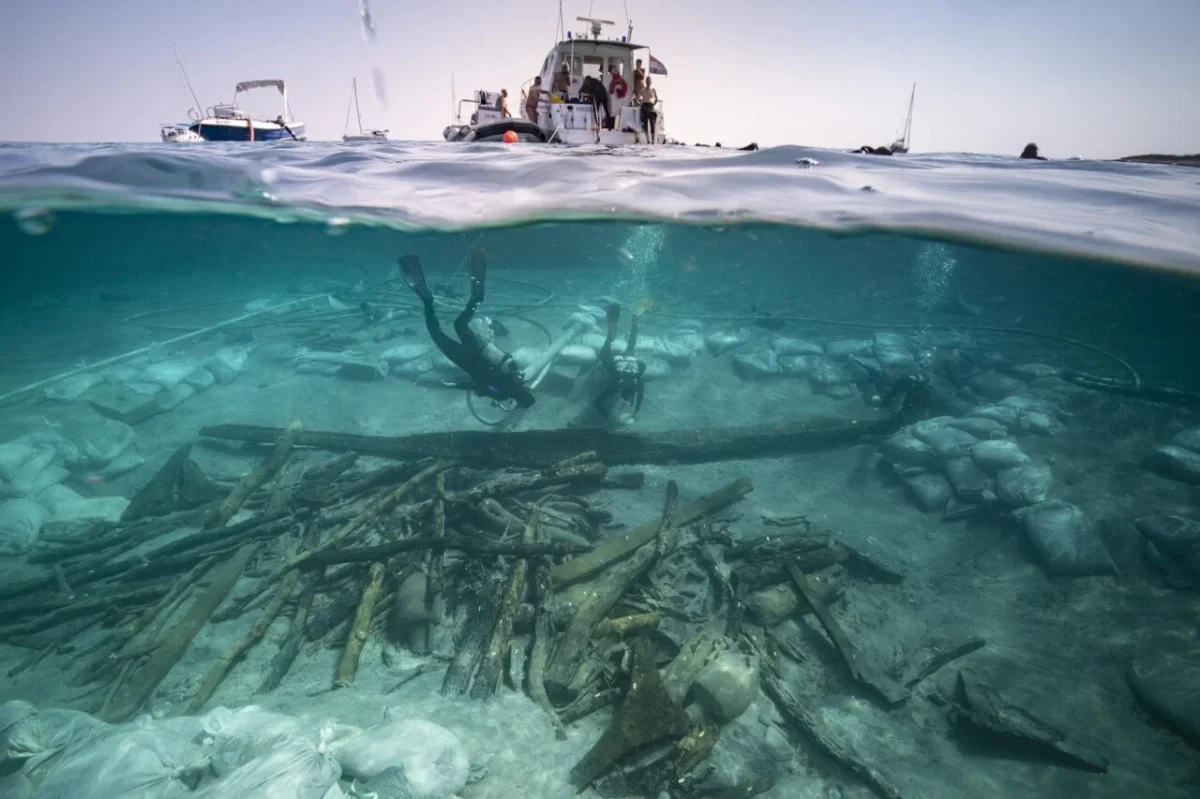

The study published in Frontiers in Materials reveals that Roman shipbuilders employed advanced waterproofing methods, continuously refurbishing their vessels during voyages. Researchers examined pollen trapped in the Ilovik-Paržine 1 shipwreck, which was discovered in 2016, to uncover the composition of organic waterproofing materials used in ancient shipbuilding.
By integrating archaeology, chemistry, and palynology, the team was able to confirm the sophisticated techniques employed by the Romans. The analysis indicated that ships were regularly coated with organic materials to enhance their durability at sea. This interdisciplinary method also facilitates a deeper understanding of functional variations and repair stages in ancient maritime practices.
Armelle Charrié and Quentin Couillebault, bioarchaeologists from the University of Strasbourg and Aix-Marseille University, noted that organic archaeomaterials are increasingly valuable for insights into various aspects of historical life. Although such materials are often poorly preserved, the adhesive coating found on the hull of the wreck offers a unique glimpse into ancient manufacturing methods.