
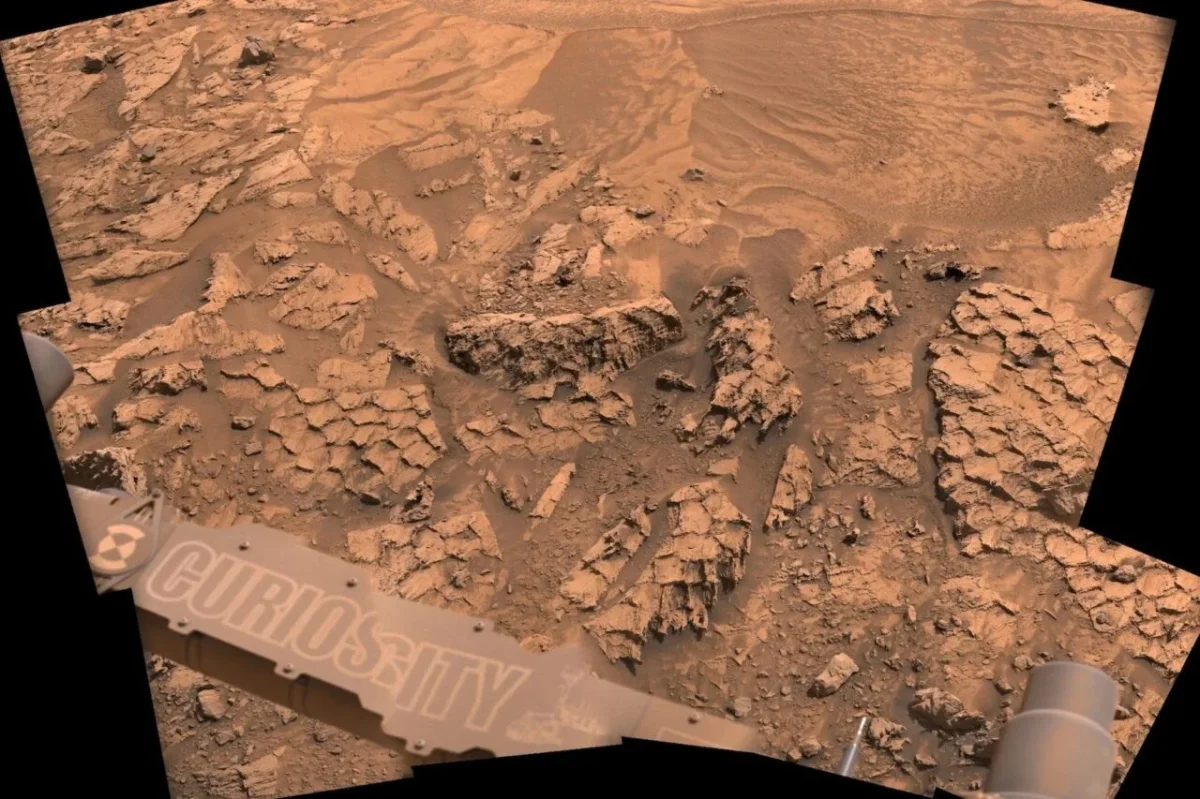

A striking discovery was made by NASA's Curiosity rover on April 7, as it photographed a vast expanse of polygon-shaped patterns resembling a giant reptile's shed skin on the surface of Mars. This unusual formation stretches for meters, drawing significant interest from scientists at NASA's Jet Propulsion Laboratory.
The rover captured this image while navigating toward the Antofagasta crater. According to Abigail Fraeman, the mission's deputy project scientist, the abundance of honeycomb-shaped rocks is unprecedented, with this particular pattern being more dramatically extensive than previously observed.
Curiosity utilized its Mastcam instrument to document the terrain, revealing rocks that exhibit a fish-scale-like appearance. The team is currently analyzing images and chemical data to explore how these textures formed, which may provide insights into the ancient history of Mars, including its past presence of liquid water.
As Curiosity continues its mission, scientists hope to distinguish between various hypotheses regarding the formation of these intriguing patterns. This research may shed light on the climatic conditions that existed on Mars in its distant past.