
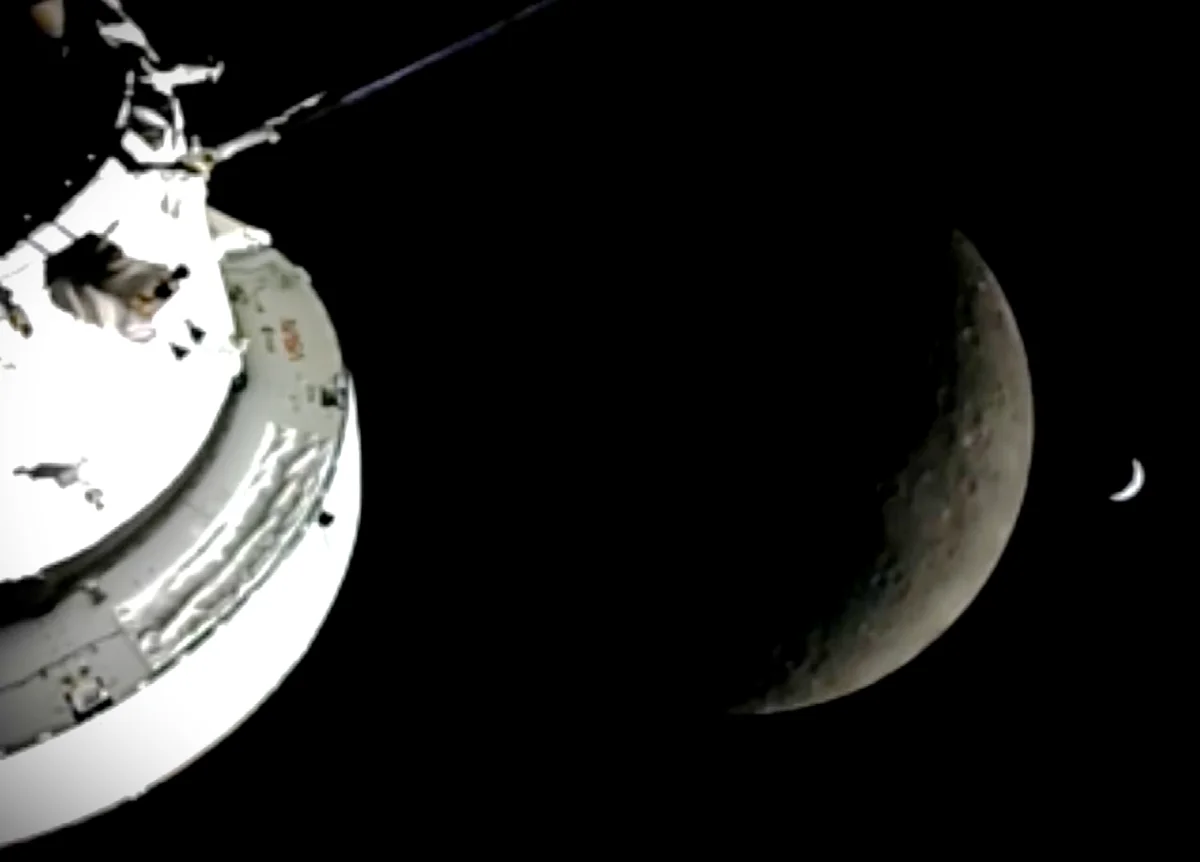

Artemis 2 crew breaks distance record, capturing crucial data from lunar far side

Artemis 2 crew breaks distance record, capturing crucial data from lunar far side

Four astronauts achieved a historic lunar flyby, reaching 252,756 miles from Earth, eclipsing Apollo 13's record. This mission paves the way for future lunar landings.

NeboAI I summarize the news with data, figures and context
IN 30 SECONDS

IN 1 SENTENCE

SENTIMENT
Neutral

𒀭
NeboAI is working, please wait...
Preparing detailed analysis
Quick summary completed
Extracting data, figures and quotes...
Identifying key players and context
DETAILED ANALYSIS
SHARE

NeboAI produces automated editions of journalistic texts in the form of summaries and analyses. Its experimental results are based on artificial intelligence. As an AI edition, texts may occasionally contain errors, omissions, incorrect data relationships and other unforeseen inaccuracies. We recommend verifying the content.

Today, four astronauts achieved a significant milestone by becoming the first humans to orbit the moon since the Apollo missions, marking a pivotal moment in the Artemis program. The crew of Artemis 2 reached a maximum distance of 252,756 miles from Earth, exceeding the previous Apollo 13 record by over 4,000 miles.

NASA astronaut Christina Koch made history as the first woman to travel beyond Earth’s orbit during this mission. Alongside her, Victor Glover became the first Black astronaut to visit the moon, and Canadian astronaut Jeremy Hansen represented the first non-U.S. astronaut to partake in this journey. The primary goal of this 10-day mission is to conduct a crewed test flight of the Orion spacecraft, which had previously completed a similar mission uncrewed in 2022.

The Artemis 2 mission is designed to lay the groundwork for future lunar exploration, including a potential crewed moon landing in 2028. Key contributions to the Orion spacecraft came from Seattle-area technology firms, including L3Harris’ Aerojet Rocketdyne and Karman Space Systems, which developed critical systems for the spacecraft.

Want to read the full article? Access the original article with all the details.
Read Original Article
TL;DR

This article is an original summary for informational purposes. Image credits and full coverage at the original source. · View Content Policy

Editorial
Editorial Staff

Our editorial team works around the clock to bring you the latest tech news, trends, and insights from the industry. We cover everything from artificial intelligence breakthroughs to startup funding rounds, gadget launches, and cybersecurity threats. Our mission is to keep you informed with accurate, timely, and relevant technology coverage.

Press Enter to search or ESC to close