
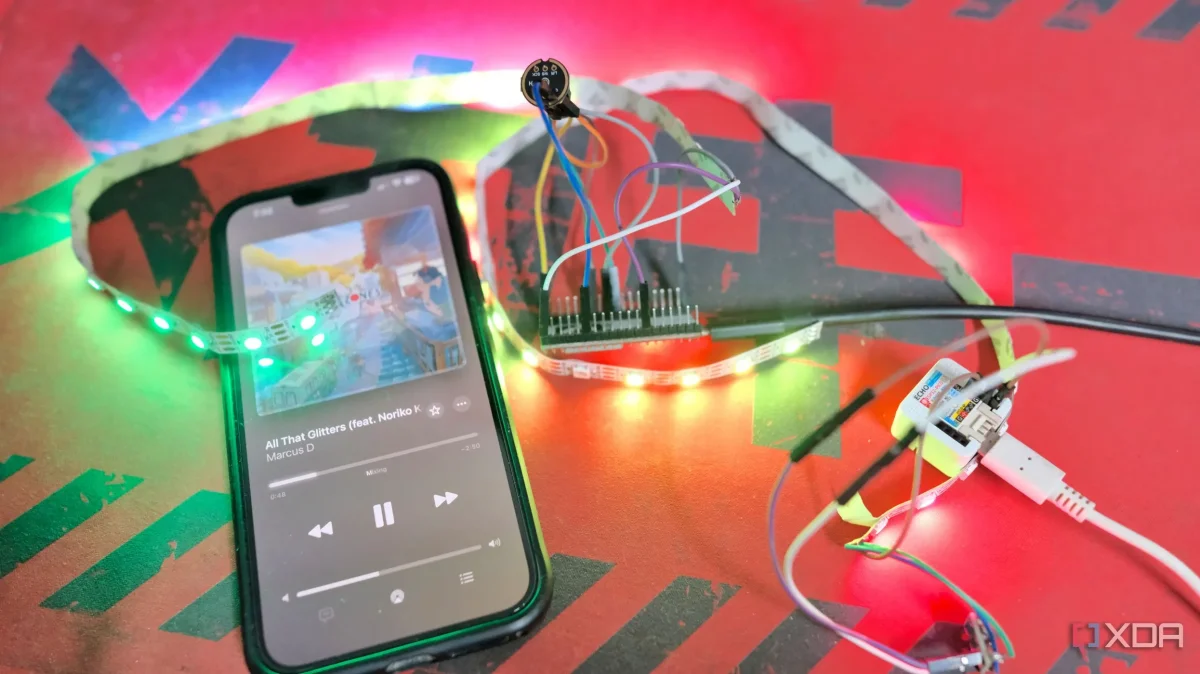

Building a responsive RGB LED strip can be achieved for approximately $20, significantly lower than commercial options like Govee's strip at $35 or Philips' devices priced up to $145. The project utilizes an ESP32 board, a WS2812B LED strip, an INMP441 microphone, and a Raspberry Pi 4 charger, allowing for direct audio reaction without relying on cloud services or apps.
Key components include a 1-meter strip of 5V WS2812B LEDs, which require a dedicated power supply of 5V/3A to support the maximum of 60 LEDs. Each LED draws about 60mA at full brightness, necessitating careful power management to avoid overload.
The assembly process involves soldering the LED strip's data input to the ESP32 and ensuring shared ground connections among all components. Proper power routing is critical; the LED strip must connect to the external charger rather than the ESP32's VIN to prevent damage.