

Robotics Revolution: Physical Intelligence's Brain Adapts to Untrained Tasks

Robotics Revolution: Physical Intelligence's Brain Adapts to Untrained Tasks

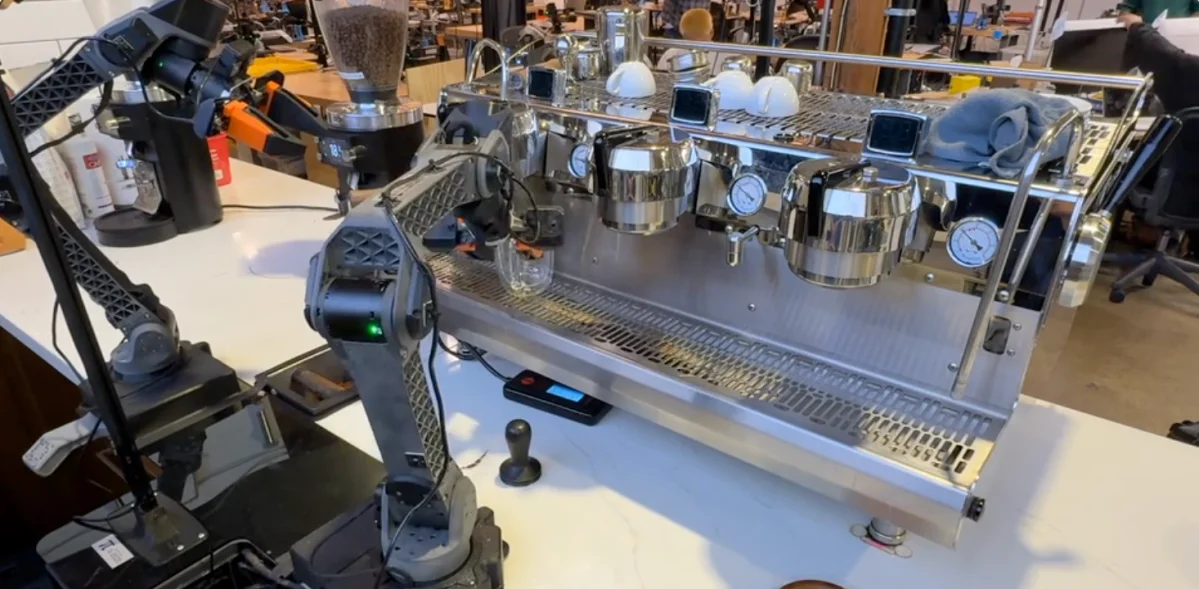
Physical Intelligence's new model π0.7 shows potential for robots to learn unfamiliar tasks with minimal training, hinting at a breakthrough in AI capabilities.

NeboAI I summarize the news with data, figures and context
IN 30 SECONDS

IN 1 SENTENCE

SENTIMENT
Neutral

𒀭
NeboAI is working, please wait...
Preparing detailed analysis
Quick summary completed
Extracting data, figures and quotes...
Identifying key players and context
DETAILED ANALYSIS
SHARE

NeboAI produces automated editions of journalistic texts in the form of summaries and analyses. Its experimental results are based on artificial intelligence. As an AI edition, texts may occasionally contain errors, omissions, incorrect data relationships and other unforeseen inaccuracies. We recommend verifying the content.

New research from Physical Intelligence, a robotics startup based in San Francisco, reveals its latest model, π0.7, can enable robots to accomplish tasks without prior specific training. This capability has surprised the company’s researchers, who believe it signifies a potential turning point in robotic AI, akin to advancements seen in large language models.

The model showcases an ability known as compositional generalization, allowing it to integrate skills from various contexts to tackle unfamiliar problems. Traditionally, robots have been trained through rote memorization, requiring extensive data collection for each unique task. However, π0.7 appears to deviate from this method, presenting a more efficient learning paradigm.

One notable demonstration involved an air fryer, which the model had not encountered during training. The research team identified only two instances related to the appliance in their dataset. Nonetheless, π0.7 successfully combined this limited information with general pretraining data to understand the air fryer's functionality.

Sergey Levine, co-founder of Physical Intelligence, emphasized that once the model surpasses basic task completion, its capabilities can expand more significantly than expected with additional data, similar to trends in language and vision AI.

Want to read the full article? Access the original article with all the details.
Read Original Article
TL;DR

This article is an original summary for informational purposes. Image credits and full coverage at the original source. · View Content Policy

Editorial
Editorial Staff

Our editorial team works around the clock to bring you the latest tech news, trends, and insights from the industry. We cover everything from artificial intelligence breakthroughs to startup funding rounds, gadget launches, and cybersecurity threats. Our mission is to keep you informed with accurate, timely, and relevant technology coverage.

Press Enter to search or ESC to close