
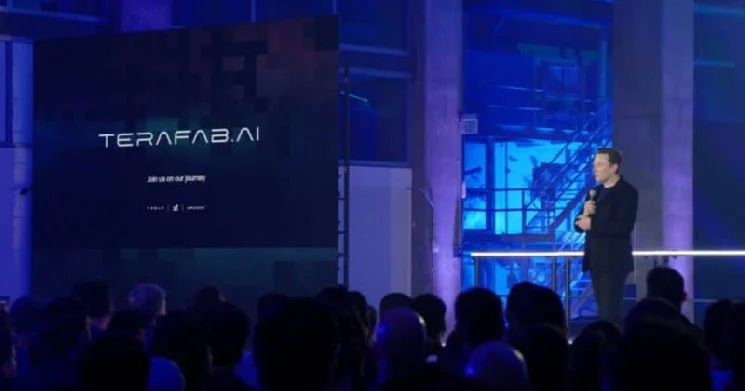

Elon Musk has introduced Terafab, a groundbreaking facility aimed at enhancing computing capabilities for artificial intelligence and supporting future human expansion into space. The facility is a joint effort by Musk's companies, including Tesla, SpaceX, and xAI, with an ambitious target of producing one terawatt of computing power each year, which is 50 times the current global output of AI chips.
Located in Texas, the Terafab project will feature an integrated chip development lifecycle encompassing everything from lithography mask creation to testing and redesign. This unified approach is expected to accelerate chip improvement cycles compared to the existing fragmented supply chain. Musk also highlighted plans for two categories of chips: one tailored for edge inference to support Optimus humanoid robots and autonomous vehicles, and another designed to withstand the harsh conditions of space.
Musk envisions that production for humanoid robots could reach between one billion and ten billion units annually, greatly exceeding the current global vehicle production of around 100 million. He underscored the limitations of terrestrial power generation, stating that achieving one terawatt of compute on Earth is impractical, given that the total U.S. electricity generation stands at about 0.5 terawatts.