
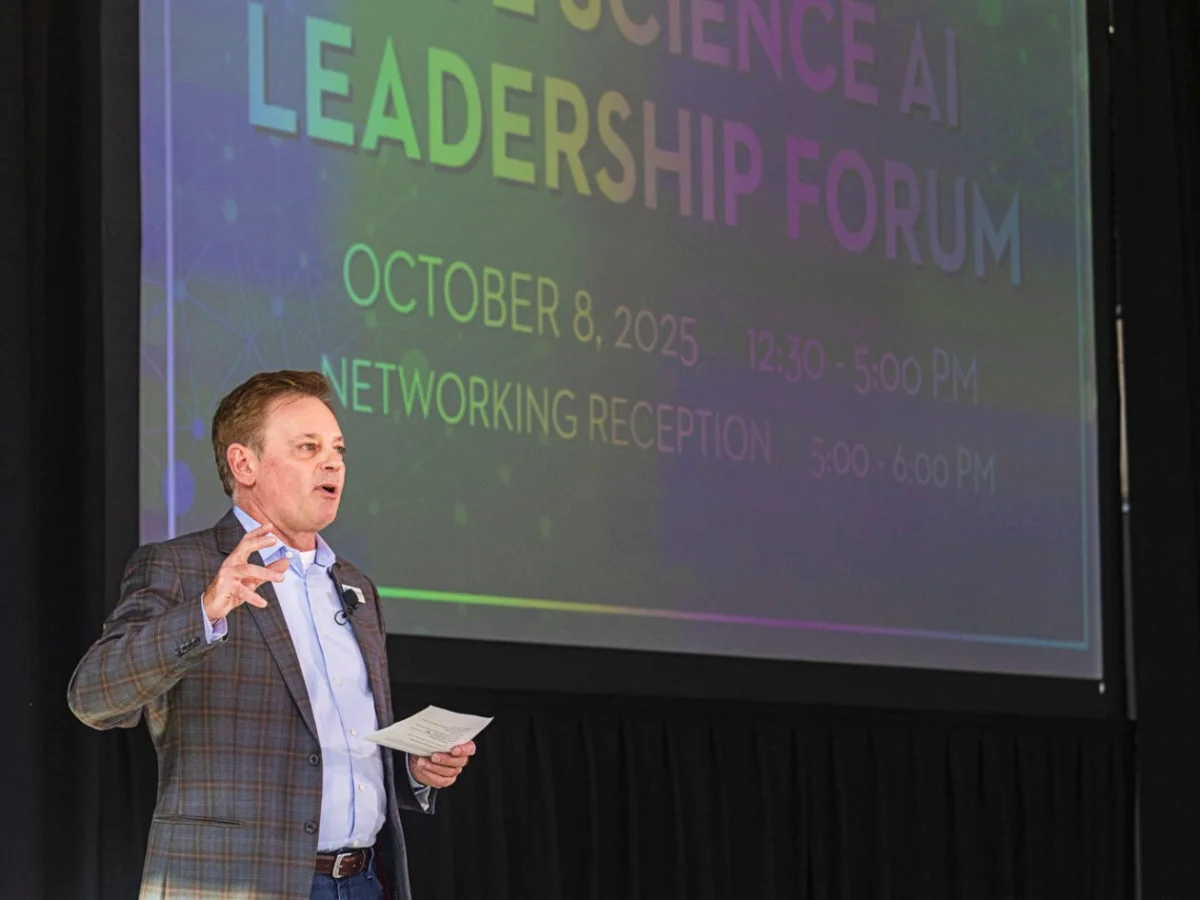

Life Science Washington empowers Seattle biotech firms to showcase global prowess

Life Science Washington empowers Seattle biotech firms to showcase global prowess

Seattle's biotech sector, valued at $41.2 billion, thrives on AI innovation, yet struggles with investor messaging. How will improved storytelling reshape its future?

NeboAI I summarize the news with data, figures and context
IN 30 SECONDS

IN 1 SENTENCE

SENTIMENT
Neutral

𒀭
NeboAI is working, please wait...
Preparing detailed analysis
Quick summary completed
Extracting data, figures and quotes...
Identifying key players and context
DETAILED ANALYSIS
SHARE

NeboAI produces automated editions of journalistic texts in the form of summaries and analyses. Its experimental results are based on artificial intelligence. As an AI edition, texts may occasionally contain errors, omissions, incorrect data relationships and other unforeseen inaccuracies. We recommend verifying the content.

Seattle is positioning itself as a significant player in the global AI-driven biotech sector, with a thriving life sciences industry valued at $41.2 billion and home to approximately 1,200 companies. The region's reputation is bolstered by institutions like the University of Washington’s Institute for Protein Design (IPD), led by Nobel Laureate David Baker, which has been instrumental in fostering biotech startups since its inception.

Marc Cummings, the president and CEO of Life Science Washington, emphasized the necessity of effective communication in attracting investors to the sector. His organization is now providing pitch coaching to help startup founders articulate their stories compellingly. Cummings highlighted that Washington's biotech founders are often driven by mission rather than profit, distinguishing them in the eyes of venture capitalists.

AI's integration into biotech is also notable, particularly in drug target identification, although Cummings pointed out that it cannot substitute for essential biological experiments and clinical trials. The traditional timelines for drug development, spanning 10 to 20 years, remain unchanged, despite AI's potential to streamline early processes.

Want to read the full article? Access the original article with all the details.
Read Original Article
TL;DR

This article is an original summary for informational purposes. Image credits and full coverage at the original source. · View Content Policy

Editorial
Editorial Staff

Our editorial team works around the clock to bring you the latest tech news, trends, and insights from the industry. We cover everything from artificial intelligence breakthroughs to startup funding rounds, gadget launches, and cybersecurity threats. Our mission is to keep you informed with accurate, timely, and relevant technology coverage.

Press Enter to search or ESC to close