

Southeast Asian Militaries Face Cyber Threats as Chinese Hackers Deploy New Malware

Southeast Asian Militaries Face Cyber Threats as Chinese Hackers Deploy New Malware

A China-based cyber espionage group has targeted Southeast Asian military organizations since 2020, focusing on sensitive defense information and collaboration with Western forces.

NeboAI I summarize the news with data, figures and context
IN 30 SECONDS

IN 1 SENTENCE

SENTIMENT
Neutral

𒀭
NeboAI is working, please wait...
Preparing detailed analysis
Quick summary completed
Extracting data, figures and quotes...
Identifying key players and context
DETAILED ANALYSIS
SHARE

NeboAI produces automated editions of journalistic texts in the form of summaries and analyses. Its experimental results are based on artificial intelligence. As an AI edition, texts may occasionally contain errors, omissions, incorrect data relationships and other unforeseen inaccuracies. We recommend verifying the content.

A cyber espionage campaign, attributed to a China-based group, has been targeting military organizations in Southeast Asia since at least 2020. Identified by Palo Alto Networks' Unit 42 as CL-STA-1087, the operation is characterized by its methodical approach to intelligence gathering rather than mass data theft.

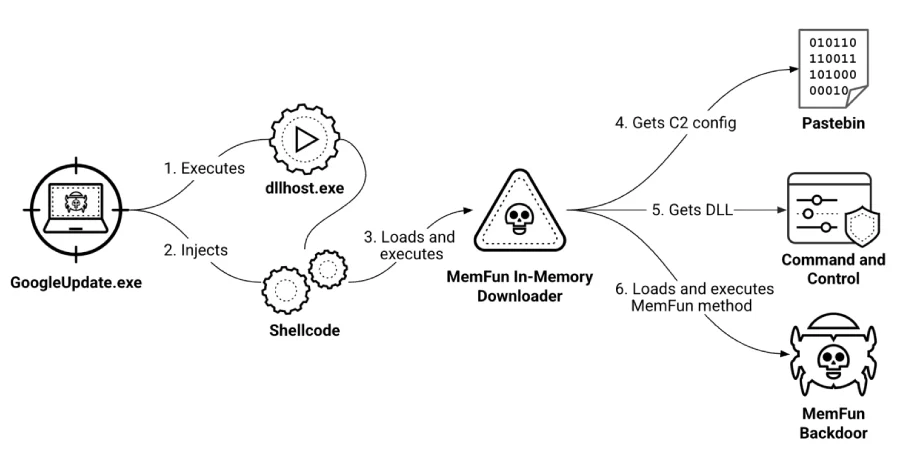
The attackers have focused on collecting sensitive information, particularly concerning military capabilities and collaboration with Western forces. This operation employs advanced persistent threat (APT) techniques, utilizing backdoors named AppleChris and MemFun, along with a credential harvester called Getpass. Researchers noted that the attackers demonstrated strategic patience, employing sophisticated methods to maintain access to compromised systems.

Malicious activity was uncovered following the detection of unusual PowerShell executions that allowed the attackers to establish a connection to a command-and-control (C2) server. The precise method of initial access is still unclear, but the deployment of AppleChris across various endpoints suggests a deliberate strategy aimed at evading detection and ensuring operational persistence.

Want to read the full article? Access the original article with all the details.
Read Original Article
TL;DR

This article is an original summary for informational purposes. Image credits and full coverage at the original source. · View Content Policy

Editorial
Editorial Staff

Our editorial team works around the clock to bring you the latest tech news, trends, and insights from the industry. We cover everything from artificial intelligence breakthroughs to startup funding rounds, gadget launches, and cybersecurity threats. Our mission is to keep you informed with accurate, timely, and relevant technology coverage.

Press Enter to search or ESC to close