
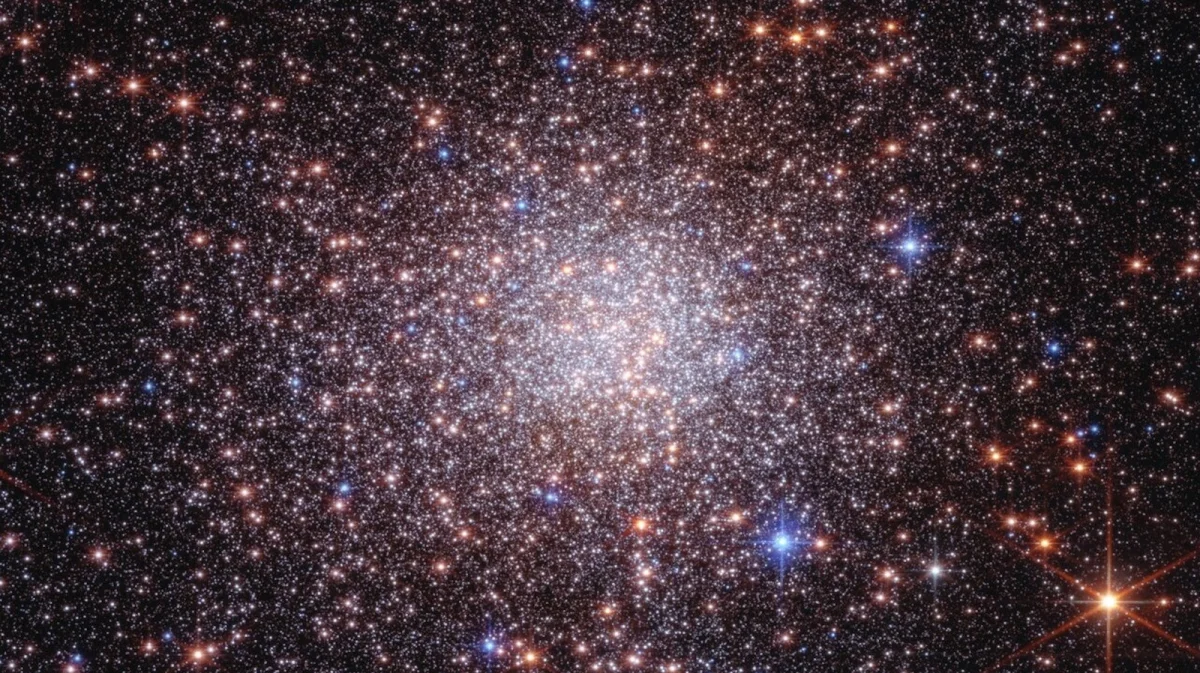

The confirmation of a new phenomenon known as bulge fossil fragments was made by researchers utilizing the James Webb Space Telescope, shedding light on the Milky Way's formation. The study centered around Terzan 5, a region in the galaxy's center, which has proven difficult to analyze due to high star density and dust.
Previously misclassified as a globular star cluster, Terzan 5 is now recognized as having undergone at least four distinct phases of star formation. The research revealed two ancient star populations, with ages of 12.5 billion and 4.7 billion years, alongside more recent formations at 3.8 billion and 2.5 billion years ago.
Francesco R. Ferraro, a professor at the University of Bologna and principal investigator, noted that Terzan 5's unique formation history indicates that it was not assimilated into the bulge during its development. The findings are documented in the journal Astronomy & Astrophysics, providing new insights into early galaxy formation processes.