
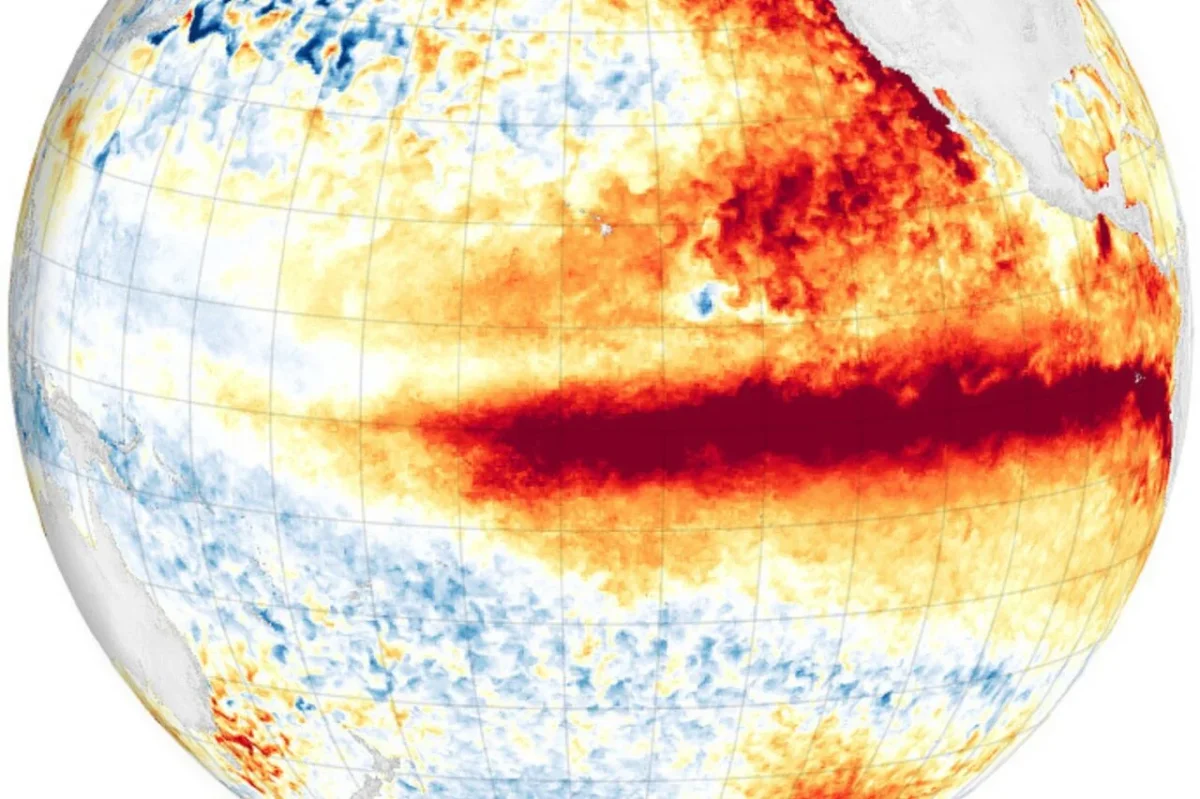

Forecasters predict that a significant El Niño event may emerge this summer, potentially leading to a new global temperature record. This warming phenomenon in the tropical Pacific is expected to intensify the ongoing climate crisis, as El Niño events now occur alongside human-induced climate change, complicating their effects on global temperatures.
The El Niño-Southern Oscillation (ENSO) is characterized by alternating warm (El Niño) and cool (La Niña) sea surface temperatures, with occurrences averaging every two to seven years, according to the National Oceanic and Atmospheric Administration (NOAA). This climate cycle significantly influences atmospheric circulation patterns, which affect weather and temperatures worldwide.
During El Niño periods, elevated sea surface temperatures contribute to a rise in the global temperature, exacerbating extreme weather events already intensified by climate change. According to Michael Mcphaden, a senior scientist at NOAA, the combination of El Niño and climate change results in severe weather phenomena, including deadly heat waves, intensified storms, and increased droughts. The implications of this potential El Niño are substantial as the world grapples with rising temperatures and changing climate conditions.