

NASA's Nancy Grace Roman Telescope Set to Unlock Secrets of the Universe

NASA's Nancy Grace Roman Telescope Set to Unlock Secrets of the Universe

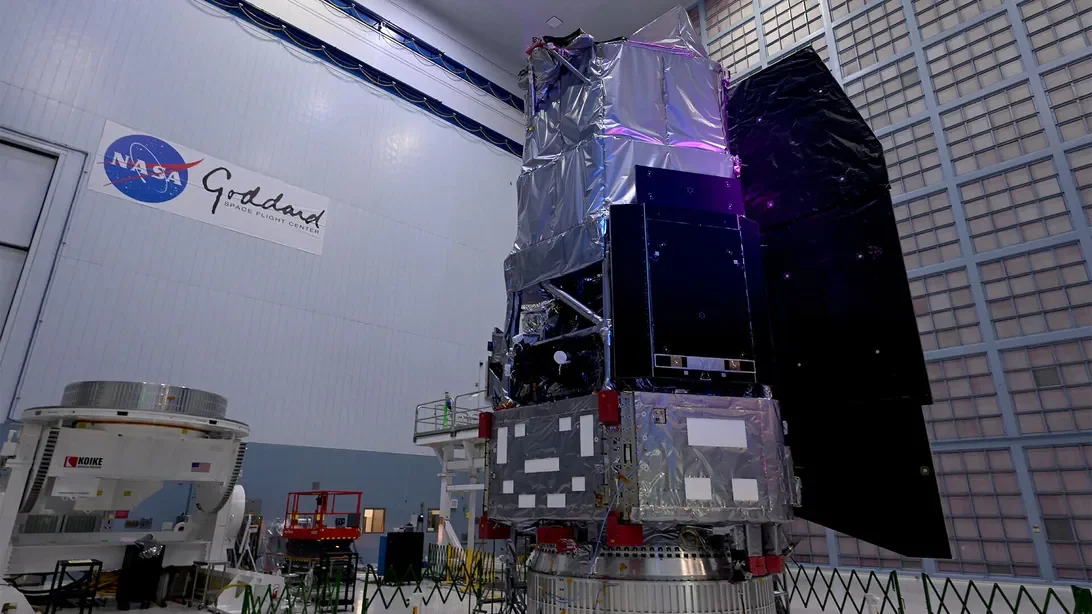
NASA's Nancy Grace Roman Space Telescope is set to launch on Aug. 30, eight months ahead of schedule, aiming to capture images 100 times larger than Hubble's in its quest to explore the universe.

NeboAI I summarize the news with data, figures and context
IN 30 SECONDS

IN 1 SENTENCE

SENTIMENT
Neutral

𒀭
NeboAI is working, please wait...
Preparing detailed analysis
Quick summary completed
Extracting data, figures and quotes...
Identifying key players and context
DETAILED ANALYSIS
SHARE

NeboAI produces automated editions of journalistic texts in the form of summaries and analyses. Its experimental results are based on artificial intelligence. As an AI edition, texts may occasionally contain errors, omissions, incorrect data relationships and other unforeseen inaccuracies. We recommend verifying the content.

NASA has announced that the launch of the Nancy Grace Roman Space Telescope is scheduled for August 30, significantly advancing the project timeline by approximately eight months. The telescope, which is being prepared for transit from NASA's Goddard Space Flight Center in Greenbelt, Maryland to the Kennedy Space Center in Florida, is currently being packed for its journey.

Once it arrives at the launch site, engineers will conduct detailed inspections to ensure the telescope is undamaged from transit. The fueling process will require about 290 gallons of hydrazine, followed by several preparatory rehearsals prior to launch. The Roman Telescope is destined for the Sun-Earth L2 Lagrange point, a location about 1 million miles from Earth that offers a stable orbit.

Named after NASA's first female executive, the Roman telescope features a wider field of view compared to the Hubble Space Telescope, allowing it to capture images at least 100 times larger than those from Hubble. This capability enables it to survey the sky efficiently, targeting visible and infrared wavelengths.

Want to read the full article? Access the original article with all the details.
Read Original Article
TL;DR

This article is an original summary for informational purposes. Image credits and full coverage at the original source. · View Content Policy

Editorial
Editorial Staff

Our editorial team works around the clock to bring you the latest tech news, trends, and insights from the industry. We cover everything from artificial intelligence breakthroughs to startup funding rounds, gadget launches, and cybersecurity threats. Our mission is to keep you informed with accurate, timely, and relevant technology coverage.

Press Enter to search or ESC to close