
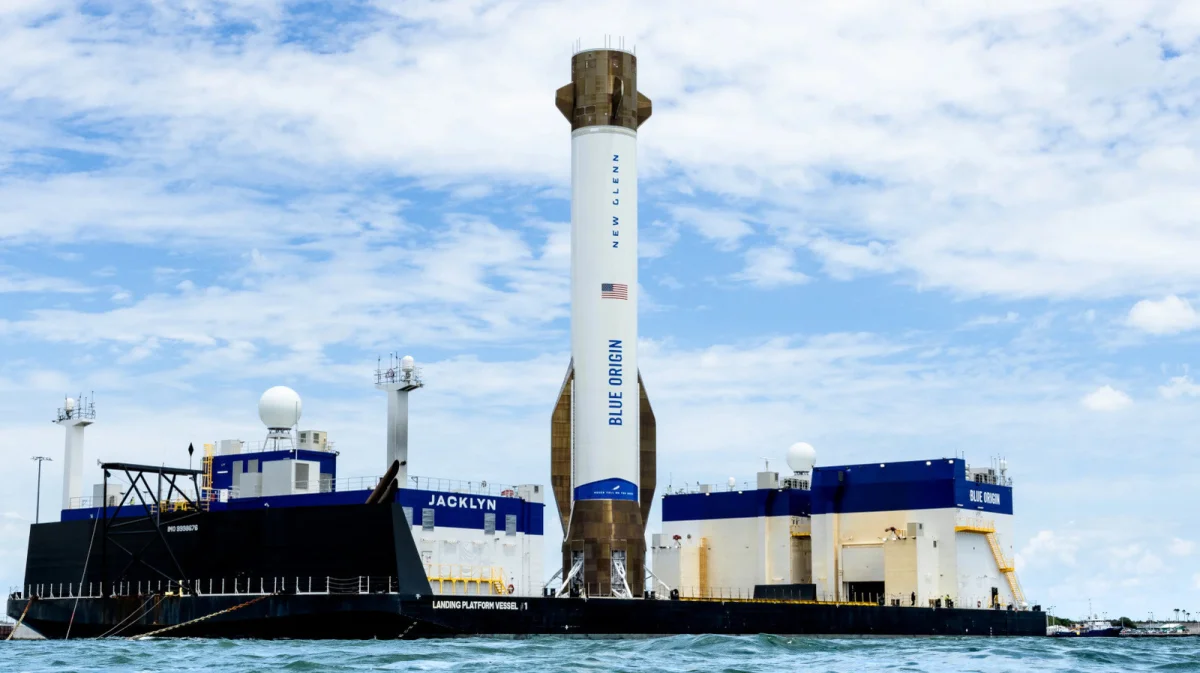

Blue Origin's New Glenn rocket set for return to space amid FAA scrutiny

Blue Origin's New Glenn rocket set for return to space amid FAA scrutiny

The FAA has cleared Blue Origin's New Glenn for its next launch after a mishap grounded it. Key corrective measures have been implemented, paving the way for future missions.

NeboAI I summarize the news with data, figures and context
IN 30 SECONDS

IN 1 SENTENCE

SENTIMENT
Neutral

𒀭
NeboAI is working, please wait...
Preparing detailed analysis
Quick summary completed
Extracting data, figures and quotes...
Identifying key players and context
DETAILED ANALYSIS
SHARE

NeboAI produces automated editions of journalistic texts in the form of summaries and analyses. Its experimental results are based on artificial intelligence. As an AI edition, texts may occasionally contain errors, omissions, incorrect data relationships and other unforeseen inaccuracies. We recommend verifying the content.

After an investigation into its previous flight mishap, Blue Origin has received clearance from the Federal Aviation Administration (FAA) to proceed with its New Glenn rocket launch preparations. The FAA had previously grounded New Glenn following its third mission, during which the rocket failed to place the AST SpaceMobile satellite into the correct orbit.

The FAA's investigation determined that a cryogenic leak caused a hydraulic line to freeze, leading to thrust issues during the rocket's second-stage engine burn. In response to this, Blue Origin implemented nine corrective actions aimed at preventing similar problems in future launches. The aerospace company announced via X that preparations for the next mission, referred to as NG-4, are underway, promising updates soon.

In its prior mission, Blue Origin successfully reused the first-stage booster but encountered difficulties when the satellite was placed into an "off-nominal orbit." This resulted in the satellite's operational altitude being too low, ultimately leading to its de-orbit. Blue Origin's CEO, Dave Limp, noted that early data indicated insufficient thrust from one of the BE-3U engines during the flight.

Want to read the full article? Access the original article with all the details.
Read Original Article
TL;DR

This article is an original summary for informational purposes. Image credits and full coverage at the original source. · View Content Policy

Editorial
Editorial Staff

Our editorial team works around the clock to bring you the latest tech news, trends, and insights from the industry. We cover everything from artificial intelligence breakthroughs to startup funding rounds, gadget launches, and cybersecurity threats. Our mission is to keep you informed with accurate, timely, and relevant technology coverage.

Press Enter to search or ESC to close