

Blue Origin's lunar rover delivery boosts NASA's ambitious Moon Base plans

Blue Origin's lunar rover delivery boosts NASA's ambitious Moon Base plans

NASA has awarded Blue Origin $188 million to develop lunar rovers, with potential for an additional $280 million. The first rover is set for a 2028 lunar mission.

NeboAI I summarize the news with data, figures and context
IN 30 SECONDS

IN 1 SENTENCE

SENTIMENT
Neutral

𒀭
NeboAI is working, please wait...
Preparing detailed analysis
Quick summary completed
Extracting data, figures and quotes...
Identifying key players and context
DETAILED ANALYSIS
SHARE

NeboAI produces automated editions of journalistic texts in the form of summaries and analyses. Its experimental results are based on artificial intelligence. As an AI edition, texts may occasionally contain errors, omissions, incorrect data relationships and other unforeseen inaccuracies. We recommend verifying the content.

NASA has granted a contract worth $188 million to Blue Origin for the development of crew-carrying lunar rovers as part of its efforts to establish a moon base. The agreement includes an additional option worth $280.4 million contingent on the company's performance.

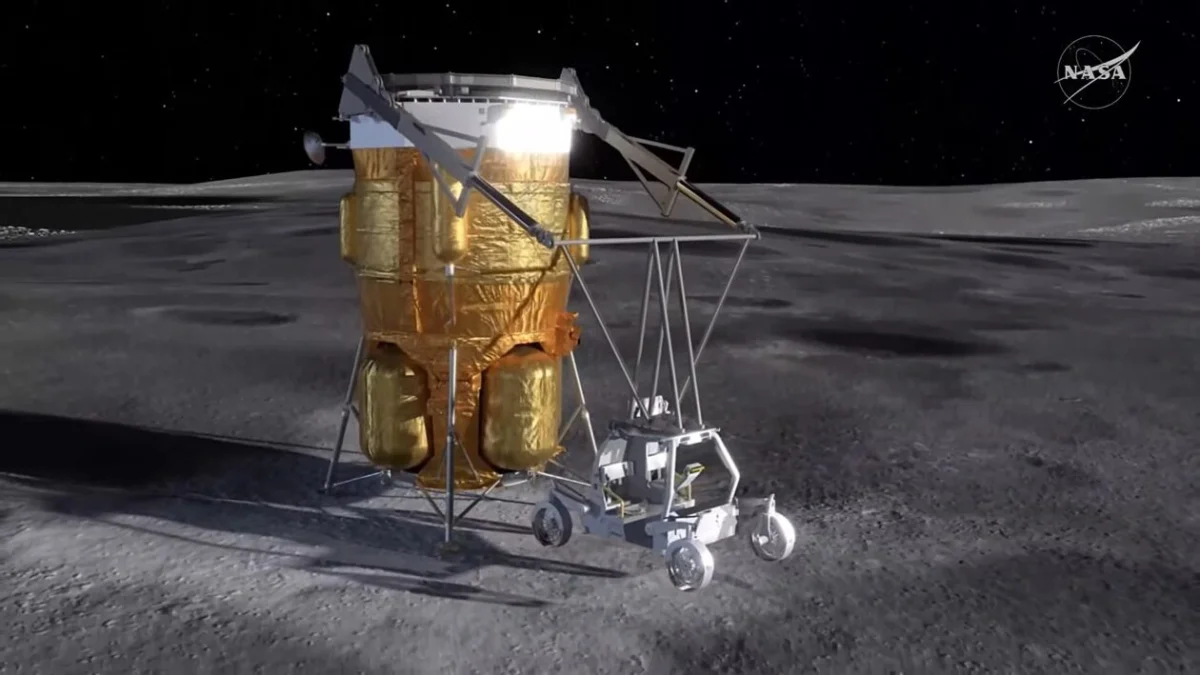
Blue Origin will utilize its Blue Moon Mark 1 lander to transport lunar terrain vehicles (LTVs), which will weigh less than one metric ton and be designed to fit within the lander for transit to the moon. The first rover is expected to arrive on the lunar surface ahead of the Artemis 4 mission, currently slated for 2028.

Two companies are involved in the development of the LTVs. California's Astrolab will build one rover, while Colorado-based Lunar Outpost is creating the Pegasus rover in collaboration with General Motors, Goodyear, and Leidos. Each rover can accommodate two astronauts and travel at speeds up to 10 kilometers per hour (6 mph), with a potential range of 200 kilometers (125 miles) for robotic missions.

NASA Administrator Jared Isaacman emphasized the importance of partnering with commercial entities to leverage their capabilities in advancing lunar exploration.

Want to read the full article? Access the original article with all the details.
Read Original Article
TL;DR

This article is an original summary for informational purposes. Image credits and full coverage at the original source. · View Content Policy

Editorial
Editorial Staff

Our editorial team works around the clock to bring you the latest tech news, trends, and insights from the industry. We cover everything from artificial intelligence breakthroughs to startup funding rounds, gadget launches, and cybersecurity threats. Our mission is to keep you informed with accurate, timely, and relevant technology coverage.

Press Enter to search or ESC to close