
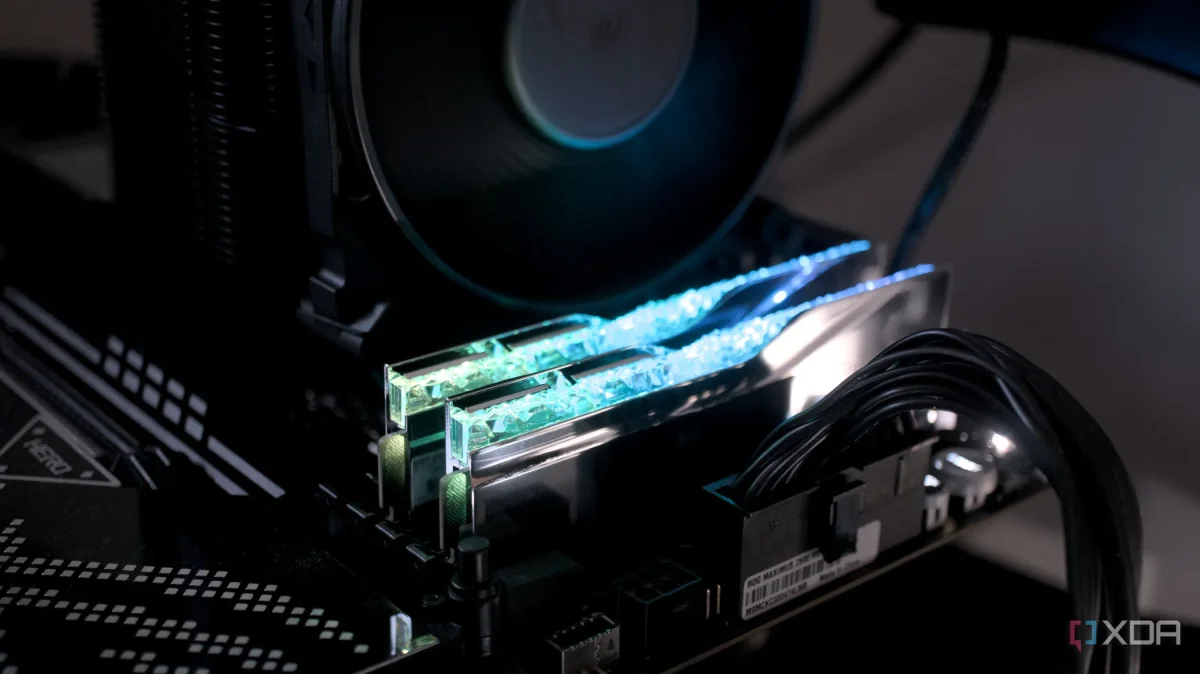

For most users, particularly gamers and professionals, targeting 6000 MHz RAM speeds is often the most effective choice for a PC build. While higher frequencies like 7200 or 8000 MHz may seem appealing, they generally provide minimal performance improvements for around 95% of users. Instead of focusing solely on clock speed, it is more beneficial to consider factors like stability, price-to-performance ratio, and CAS latency, which offer a more accurate measure of RAM efficiency.
A significant aspect to understand is that the sweet spot for RAM performance peaks at a frequency that minimizes cost while maximizing stability. Most Ryzen memory controllers reach their limit around 3000 MHz, translating to an effective 6000 MHz memory speed, which can lead to better overall performance. Conversely, Intel systems can accommodate higher speeds with fewer latency penalties, yet 6000 MHz remains ideal due to its compatibility with a wide range of entry-level motherboards.
In today’s RAM market, optimizing memory usage can potentially save users substantial amounts of money while enhancing their setups. Finding the right balance in RAM specifications can prevent unnecessary overspending on high-performance options that may not be fully utilized.