
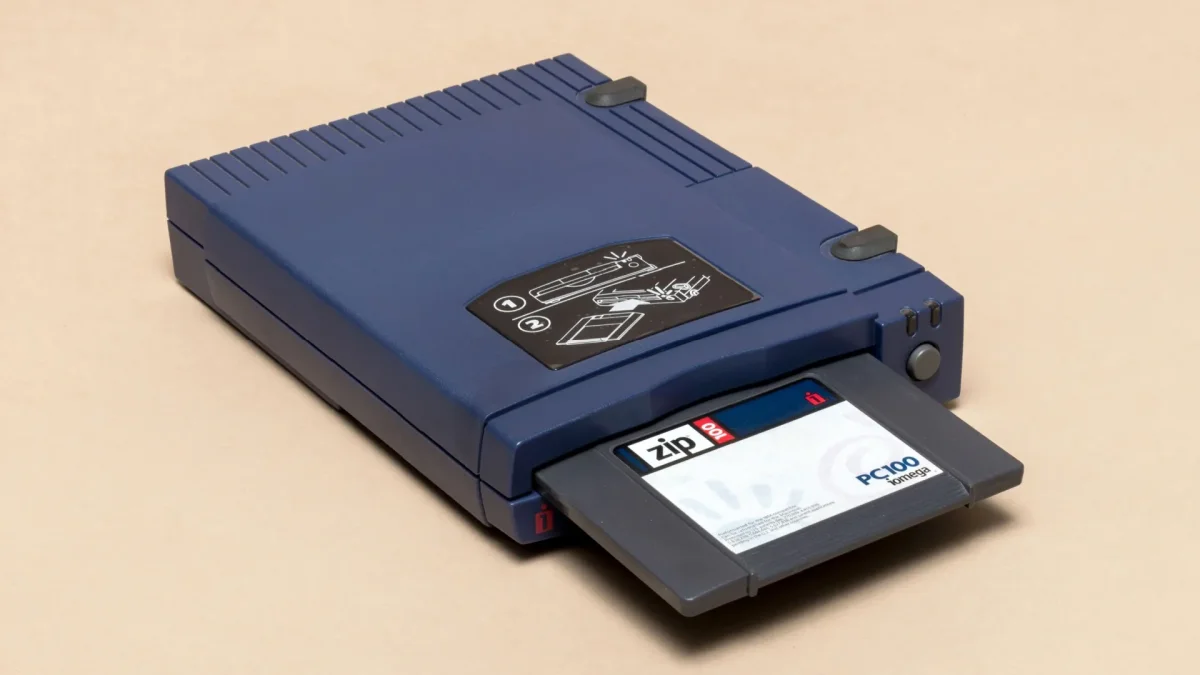

The decline of the floppy disk began with the introduction of the Zip drive, which offered an impressive 100MB of storage capacity. This marked a significant advancement compared to the traditional 1.44MB floppy disks, which had been the standard for years. Despite the promise of higher capacity, Zip drives ultimately failed to replace floppies due to several critical issues.
Initially designed for business users and media professionals, Zip drives did not gain widespread popularity. Their high cost and the emergence of writable CDs contributed to their downfall. Additionally, reliability concerns, particularly the notorious “click of death,” plagued Zip drives, rendering them less trustworthy for data storage. This clicking sound indicated misalignment of the read/write heads, leading to potential data loss.
As technology evolved, the demand for larger storage solutions continued to grow. Zip drives eventually expanded to 250MB and even 750MB capacities, but by this time, the market had shifted towards CD-RWs and USB flash drives, which became more affordable and reliable. The floppy's reign came to an end, overshadowed by these advancements in storage technology.