

Wealth Disparity Deepens as Singapore's Top 20% Control More Assets than Bottom 80%

Wealth Disparity Deepens as Singapore's Top 20% Control More Assets than Bottom 80%

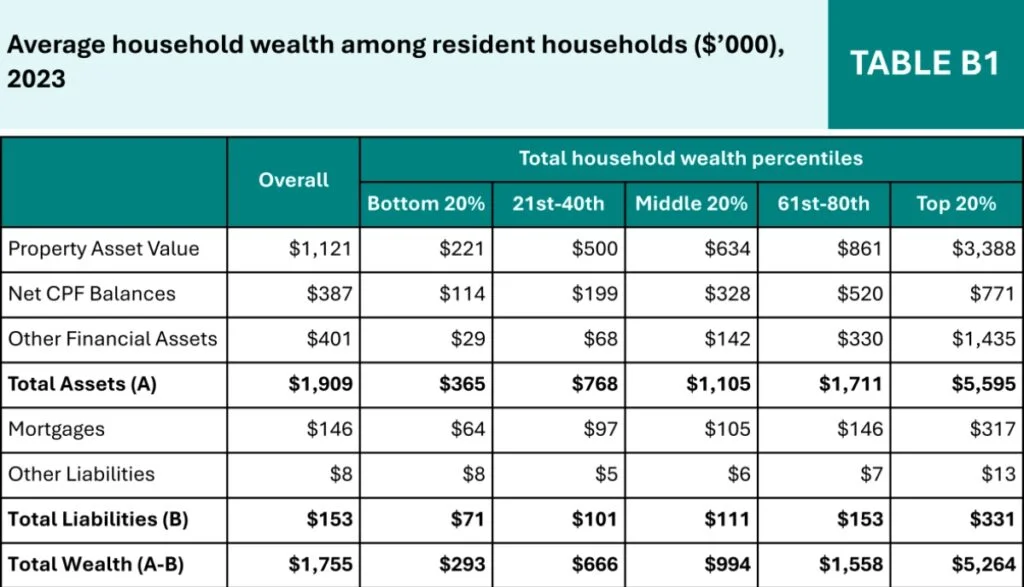
In 2023, Singapore's top 20% average household wealth reaches S$5.26 million, revealing a stark 32.7% gap compared to the remaining 80%. Explore the implications of these trends.

NeboAI I summarize the news with data, figures and context
IN 30 SECONDS

IN 1 SENTENCE

SENTIMENT
Neutral

𒀭
NeboAI is working, please wait...
Preparing detailed analysis
Quick summary completed
Extracting data, figures and quotes...
Identifying key players and context
DETAILED ANALYSIS
SHARE

NeboAI produces automated editions of journalistic texts in the form of summaries and analyses. Its experimental results are based on artificial intelligence. As an AI edition, texts may occasionally contain errors, omissions, incorrect data relationships and other unforeseen inaccuracies. We recommend verifying the content.

On February 9, the Ministry of Finance (MOF) in Singapore published a new Occasional Paper addressing trends in income growth, inequality, and social mobility. This document marks the second release of such reports since the first was issued in August 2015 and introduces wealth inequality data derived from household surveys for the first time.

The findings reveal that the average household wealth for the top 20% of Singaporeans is S$5,264,000, significantly surpassing the combined average of S$3,541,000 for the lower 80%. This results in a striking 32.7% disparity in average household wealth between these groups. The wealth Gini coefficient in Singapore is reported at 0.55, indicating a level of inequality comparable to that of other developed nations such as the UK and Japan, where coefficients range from 0.6 to 0.74.

MOF cautions that the estimates may be subject to inaccuracies due to the potential under-reporting of wealth, particularly among high-net-worth individuals. The report highlights that most households in Singapore possess positive net wealth, contrasting with nations like the UK and Australia, where the lowest income groups often face negative home equity.

Want to read the full article? Access the original article with all the details.
Read Original Article
TL;DR

This article is an original summary for informational purposes. Image credits and full coverage at the original source. · View Content Policy

Editorial
Editorial Staff

Our editorial team works around the clock to bring you the latest tech news, trends, and insights from the industry. We cover everything from artificial intelligence breakthroughs to startup funding rounds, gadget launches, and cybersecurity threats. Our mission is to keep you informed with accurate, timely, and relevant technology coverage.

Press Enter to search or ESC to close