
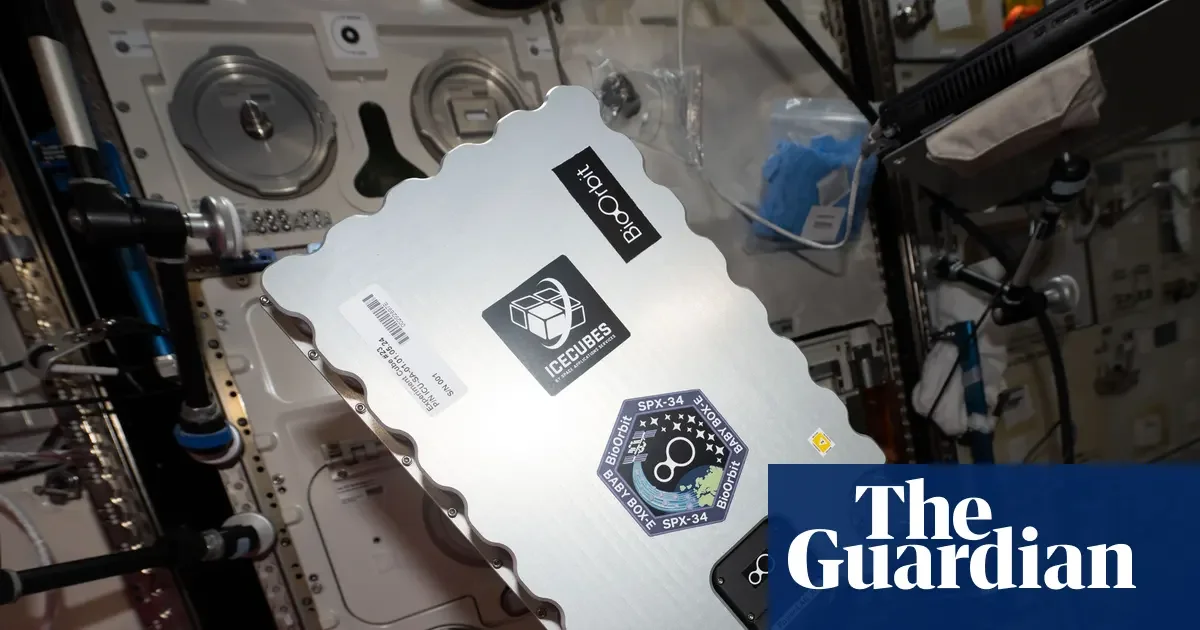

A compact unit named Box-E, developed by the British startup BioOrbit, was recently launched aboard a SpaceX rocket on May 15 from the Kennedy Space Center. This technology aims to facilitate the production of ultra-pure protein crystals in microgravity, which can eventually lead to innovative self-injected cancer treatments.
The unit will remain in orbit for approximately six weeks, allowing pharmaceutical compounds to crystallize into stable structures, a process hindered by gravity on Earth. Once the crystals return to Earth, they can be transformed into cancer medications that patients can inject themselves, eliminating the need for lengthy hospital visits.
Dr. Katie King, BioOrbit's co-founder and CEO, emphasizes the importance of these orbital tests as a significant advancement toward producing large-scale protein crystals in space. Previous experiments aboard the International Space Station have demonstrated the efficacy of this method, with US pharmaceutical company Merck already utilizing it to create a quicker injection for its cancer drug Keytruda, which received regulatory approval in September.