

Burnout Surges Among Singapore Workers Despite High Job Satisfaction Levels

Burnout Surges Among Singapore Workers Despite High Job Satisfaction Levels

Singapore ranks third in global happiness but faces a stark 25% gap between worker expectations and reality, highlighting a pressing need for employers to enhance well-being initiatives.

NeboAI I summarize the news with data, figures and context
IN 30 SECONDS

IN 1 SENTENCE

SENTIMENT
Neutral

𒀭
NeboAI is working, please wait...
Preparing detailed analysis
Quick summary completed
Extracting data, figures and quotes...
Identifying key players and context
DETAILED ANALYSIS
SHARE

NeboAI produces automated editions of journalistic texts in the form of summaries and analyses. Its experimental results are based on artificial intelligence. As an AI edition, texts may occasionally contain errors, omissions, incorrect data relationships and other unforeseen inaccuracies. We recommend verifying the content.

Recent findings from the Jobstreet by SEEK Workplace Happiness Index indicate that while Singapore ranks third globally in happiness for 2025, there is a significant disparity between employee expectations and actual experiences. Only 56% of workers feel happy at their jobs, despite 81% believing that workplace happiness is attainable. This situation positions Singapore second to last in the APAC happiness rankings, with only Hong Kong performing worse at 47%.

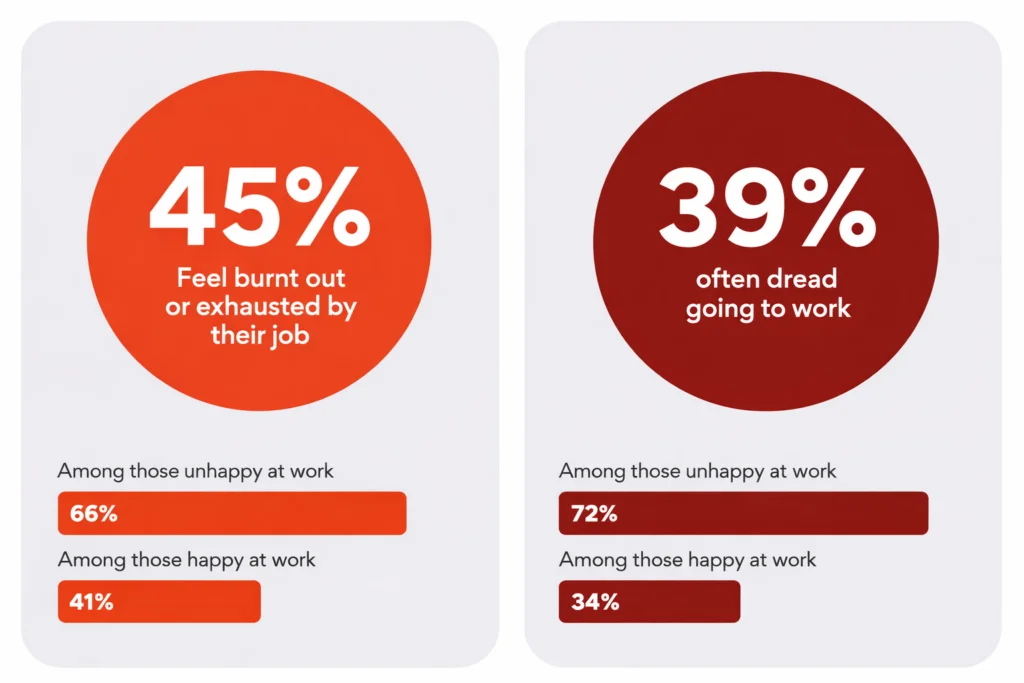
Almost half of surveyed employees reported feeling burnt out, with many who consider themselves "happy" still facing exhaustion. Interestingly, 39% of respondents dread going to work, yet 34% within that group still identify as happy, highlighting the complex emotions present in the workplace. Employers are encouraged to enhance employee well-being by offering more than just routine check-ins, such as subsidized gym memberships or confidential counseling services.

Salary remains a major factor, with 64% of workers listing it among their top five drivers of happiness. However, happiness peaks for those earning above S$10,000 per month, yet many still experience burnout, suggesting a trade-off between higher earnings and work-life balance. Age also influences workplace satisfaction, as millennials report the lowest happiness levels at 52%, while baby boomers enjoy a higher rate of 71% happiness, likely due to more meaningful work roles.

Want to read the full article? Access the original article with all the details.
Read Original Article
TL;DR

This article is an original summary for informational purposes. Image credits and full coverage at the original source. · View Content Policy

Editorial
Editorial Staff

Our editorial team works around the clock to bring you the latest tech news, trends, and insights from the industry. We cover everything from artificial intelligence breakthroughs to startup funding rounds, gadget launches, and cybersecurity threats. Our mission is to keep you informed with accurate, timely, and relevant technology coverage.

Press Enter to search or ESC to close