

Recent findings from a Wharton study involving over 10,000 participants indicate that reliance on AI-generated summaries can lead to a decline in knowledge retention and factual recall. Those who utilized AI for summarization displayed less understanding and provided fewer concrete details compared to individuals who engaged directly with original materials.
In the early 2000s, the concept of “machine reading” was introduced to describe how computers autonomously comprehend text. Today, advancements in large language models (LLMs) have enabled these systems to summarize, digest, and respond to text with impressive skill. However, this convenience may inadvertently foster a passive reading approach.
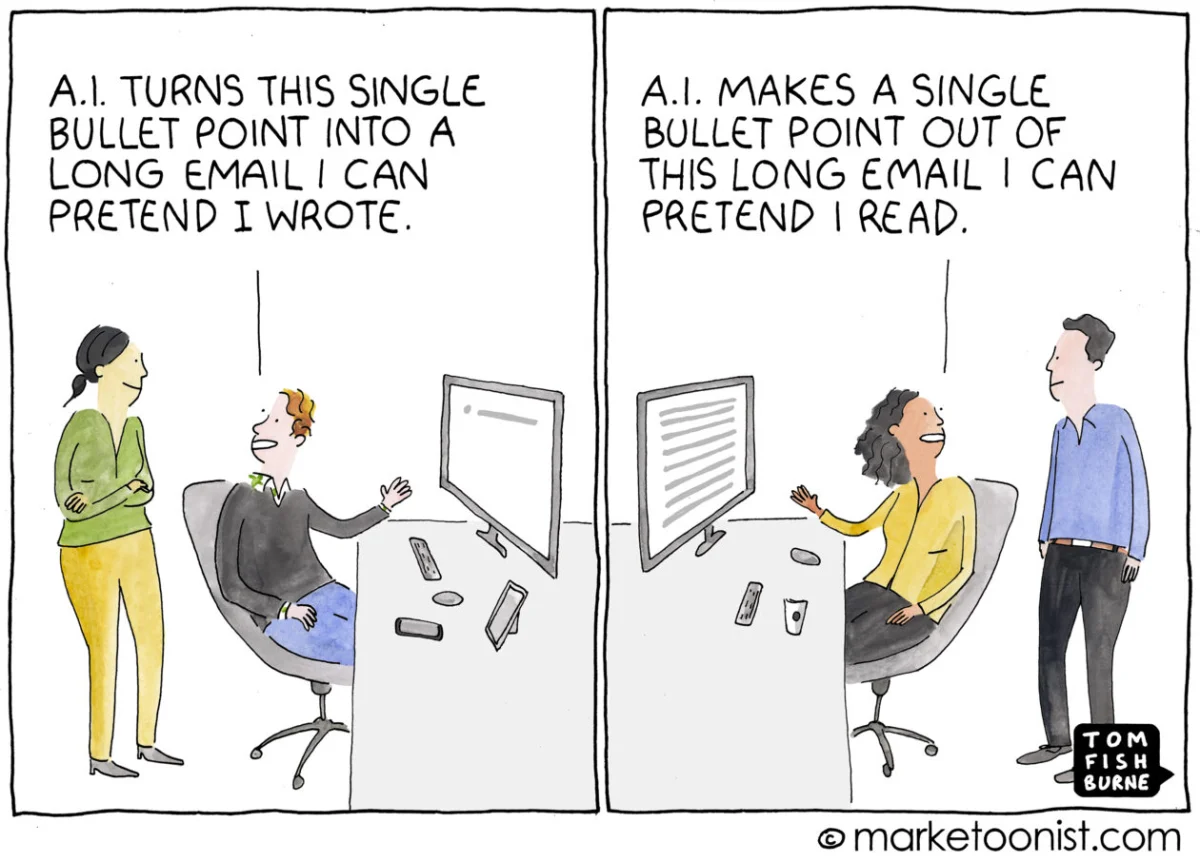
The use of AI for reading tasks, while efficient, raises concerns about the depth of understanding. Summaries produced by AI often omit critical nuances, potentially compromising the reader's grasp of important details. This trend mirrors the humorous observation made by cartoonist Tom Fishburne regarding AI's dual role in writing and reading.
Ultimately, the challenge remains: how can readers leverage AI tools to enhance productivity without sacrificing comprehension and critical engagement?