
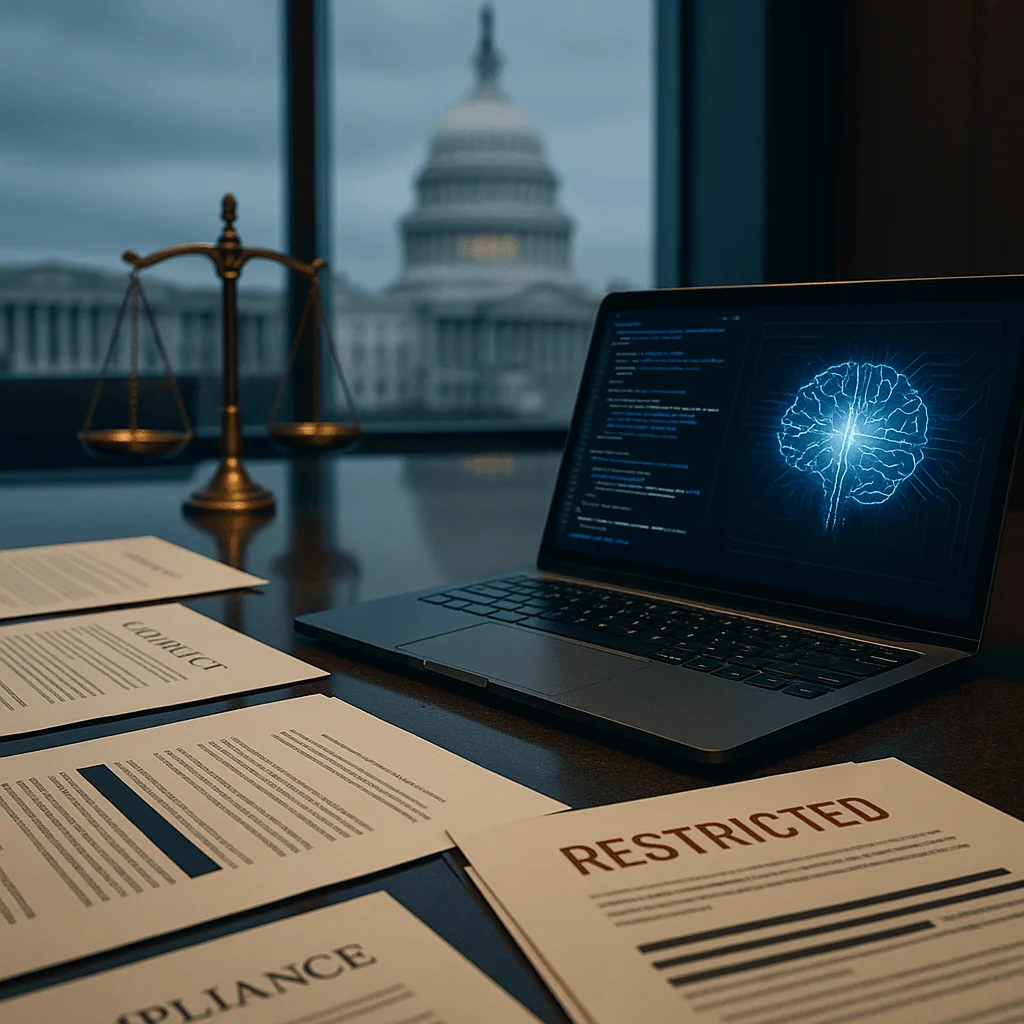

Ethical Concerns Ground Anthropic's Military AI Contracts, Shifting Defense Strategies

Ethical Concerns Ground Anthropic's Military AI Contracts, Shifting Defense Strategies

The Justice Department's legal battle against Anthropic could redefine AI firms' relationships with the military, highlighting a clash between ethical standards and defense needs.

NeboAI I summarize the news with data, figures and context
IN 30 SECONDS

IN 1 SENTENCE

SENTIMENT
Neutral

𒀭
NeboAI is working, please wait...
Preparing detailed analysis
Quick summary completed
Extracting data, figures and quotes...
Identifying key players and context
DETAILED ANALYSIS
SHARE

NeboAI produces automated editions of journalistic texts in the form of summaries and analyses. Its experimental results are based on artificial intelligence. As an AI edition, texts may occasionally contain errors, omissions, incorrect data relationships and other unforeseen inaccuracies. We recommend verifying the content.

The U.S. Justice Department is challenging Anthropic in court, asserting that the AI safety firm’s operational restrictions undermine its suitability for defense contracts. The legal conflict arises from Anthropic’s efforts to limit military applications of its Claude AI models, which the government claims conflicts with national security needs. The Justice Department argues that its decision to penalize Anthropic was justified due to these imposed restrictions.

At the heart of the dispute is Anthropic's stance against the use of its technology in lethal autonomous weapon systems and specific military operations. This position contradicts the expectations of the Department of Defense, which requires unrestricted capabilities for sensitive military tasks. In a recent filing, the government emphasized that companies providing AI tools must prioritize mission requirements over corporate ethics.

Anthropic, known for its leadership in AI safety, has positioned itself against military harm with its “Constitutional AI” approach. However, as it sought government contracts, the challenges of aligning its ethical framework with the operational demands of the Pentagon became evident. The outcome of this case may significantly influence the relationship between AI companies and federal agencies moving forward.

Want to read the full article? Access the original article with all the details.
Read Original Article
TL;DR

This article is an original summary for informational purposes. Image credits and full coverage at the original source. · View Content Policy

Editorial
Editorial Staff

Our editorial team works around the clock to bring you the latest tech news, trends, and insights from the industry. We cover everything from artificial intelligence breakthroughs to startup funding rounds, gadget launches, and cybersecurity threats. Our mission is to keep you informed with accurate, timely, and relevant technology coverage.

Press Enter to search or ESC to close