
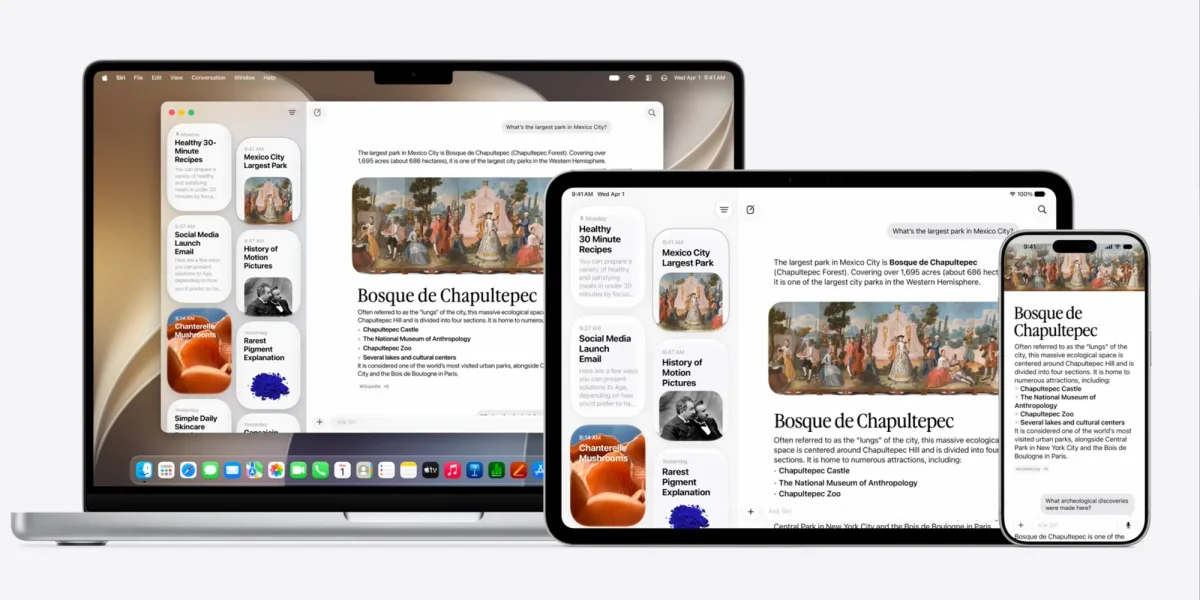

Apple’s new Foundation Models set to redefine AI landscape for developers and users

Apple’s new Foundation Models set to redefine AI landscape for developers and users

Apple's WWDC26 unveiled five new AI models in its third generation of Foundation Models, highlighting a major shift to cloud capabilities while ensuring user privacy.

NeboAI I summarize the news with data, figures and context
IN 30 SECONDS

IN 1 SENTENCE

SENTIMENT
Neutral

𒀭
NeboAI is working, please wait...
Preparing detailed analysis
Quick summary completed
Extracting data, figures and quotes...
Identifying key players and context
DETAILED ANALYSIS
SHARE

NeboAI produces automated editions of journalistic texts in the form of summaries and analyses. Its experimental results are based on artificial intelligence. As an AI edition, texts may occasionally contain errors, omissions, incorrect data relationships and other unforeseen inaccuracies. We recommend verifying the content.

Apple has unveiled its third generation of Apple Foundation Models (AFM) during the WWDC26 keynote, introducing a total of five models that include both local and cloud-based options. Among these, AFM 3 Cloud Pro operates on NVIDIA GPUs hosted in Google Cloud, marking a significant shift in Apple’s cloud strategy.

Initially launched in 2024, the AFM lineup featured an on-device language model with approximately 3 billion parameters and a more extensive server-based model utilizing Apple silicon servers. The recent announcement indicates that the AFM 3 models were developed to enhance user privacy while leveraging advanced cloud capabilities.

The models consist of AFM 3 Core and AFM 3 Code Advanced, both designed for on-device use, along with the server-based AFM Cloud, ADM 3 Cloud (Image), and AFM 3 Cloud Pro. The ADM 3 Cloud (Image) incorporates diffusion technology, while the majority of these models are optimized for Apple silicon.

This initiative follows Apple's collaboration with Google, allowing the integration of Gemini into their AI projects. The transition to third-party infrastructure for the first time under the Private Cloud Compute architecture aims to uphold Apple’s commitment to security and privacy while expanding its AI capabilities.

Want to read the full article? Access the original article with all the details.
Read Original Article
TL;DR

This article is an original summary for informational purposes. Image credits and full coverage at the original source. · View Content Policy

Editorial
Editorial Staff

Our editorial team works around the clock to bring you the latest tech news, trends, and insights from the industry. We cover everything from artificial intelligence breakthroughs to startup funding rounds, gadget launches, and cybersecurity threats. Our mission is to keep you informed with accurate, timely, and relevant technology coverage.

Press Enter to search or ESC to close