
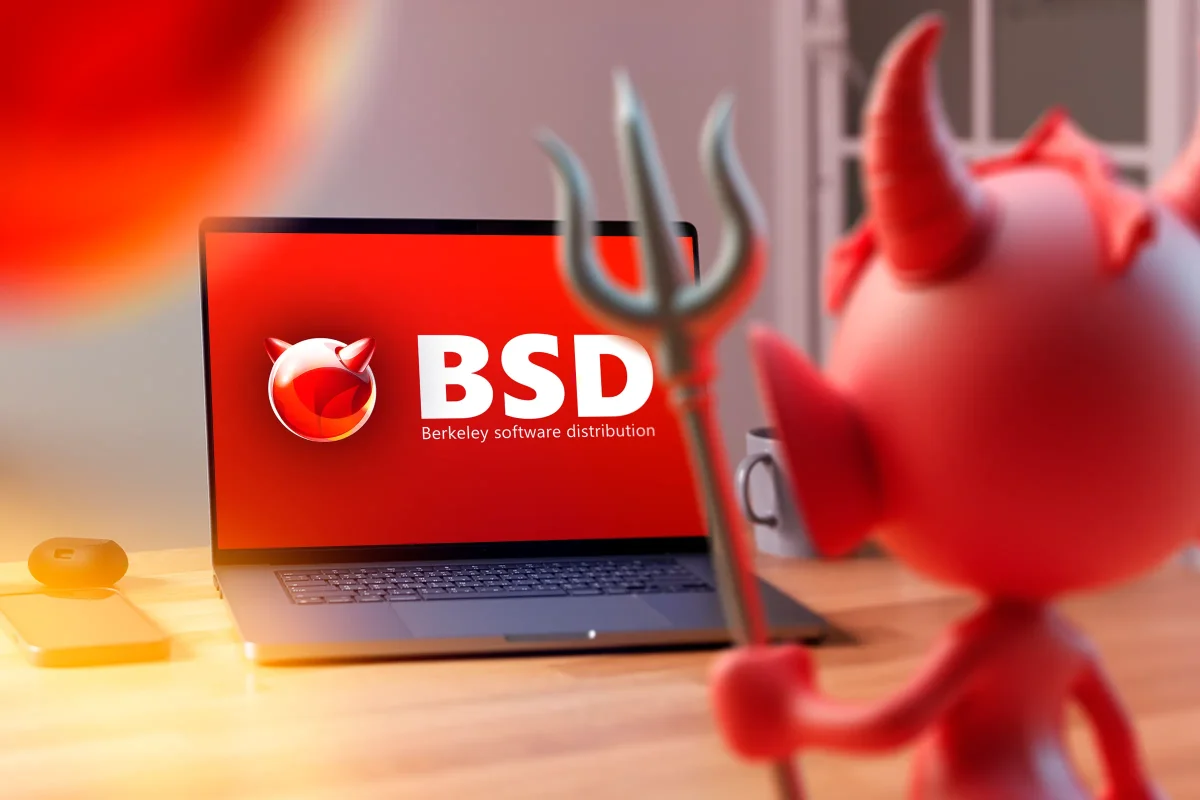

BSD vs. Linux: Key Differences That Could Influence Your Next OS Choice

BSD vs. Linux: Key Differences That Could Influence Your Next OS Choice

BSD, rooted in Unix, offers a distinct experience compared to Linux, with unique kernels and package managers. Discover how its legacy shapes modern computing.

NeboAI I summarize the news with data, figures and context
IN 30 SECONDS

IN 1 SENTENCE

SENTIMENT
Neutral

𒀭
NeboAI is working, please wait...
Preparing detailed analysis
Quick summary completed
Extracting data, figures and quotes...
Identifying key players and context
DETAILED ANALYSIS
SHARE

NeboAI produces automated editions of journalistic texts in the form of summaries and analyses. Its experimental results are based on artificial intelligence. As an AI edition, texts may occasionally contain errors, omissions, incorrect data relationships and other unforeseen inaccuracies. We recommend verifying the content.

FreeBSD is a prominent operating system that evolved from the original Unix, offering a more authentic Unix experience compared to its counterparts like Linux. While Linux was developed as a new creation mimicking Unix, BSD retains a direct lineage, originating from the Unix code itself.

The FreeBSD installation process is notably basic, relying on a terminal interface, and requires additional steps to set up a graphical desktop environment post-installation. The differences between these systems extend beyond their kernels and package managers, influencing user experience and functionality.

Unix, developed at Bell Labs in the late 1960s, initially faced distribution challenges due to AT&T's trade restrictions. To navigate these limitations, Unix was shared as source code for a nominal fee, leading to interest from various universities, including the University of California, Berkeley. There, significant enhancements were made, culminating in the creation of the Berkeley Software Distribution, or BSD.

Following further developments, 386BSD emerged as a version compatible with Intel 80386 processors, which ultimately led to the establishment of FreeBSD. Today, FreeBSD and its derivatives continue to thrive, representing the legacy of BSD in the computing landscape.

Want to read the full article? Access the original article with all the details.
Read Original Article
TL;DR

This article is an original summary for informational purposes. Image credits and full coverage at the original source. · View Content Policy

Editorial
Editorial Staff

Our editorial team works around the clock to bring you the latest tech news, trends, and insights from the industry. We cover everything from artificial intelligence breakthroughs to startup funding rounds, gadget launches, and cybersecurity threats. Our mission is to keep you informed with accurate, timely, and relevant technology coverage.

Press Enter to search or ESC to close