
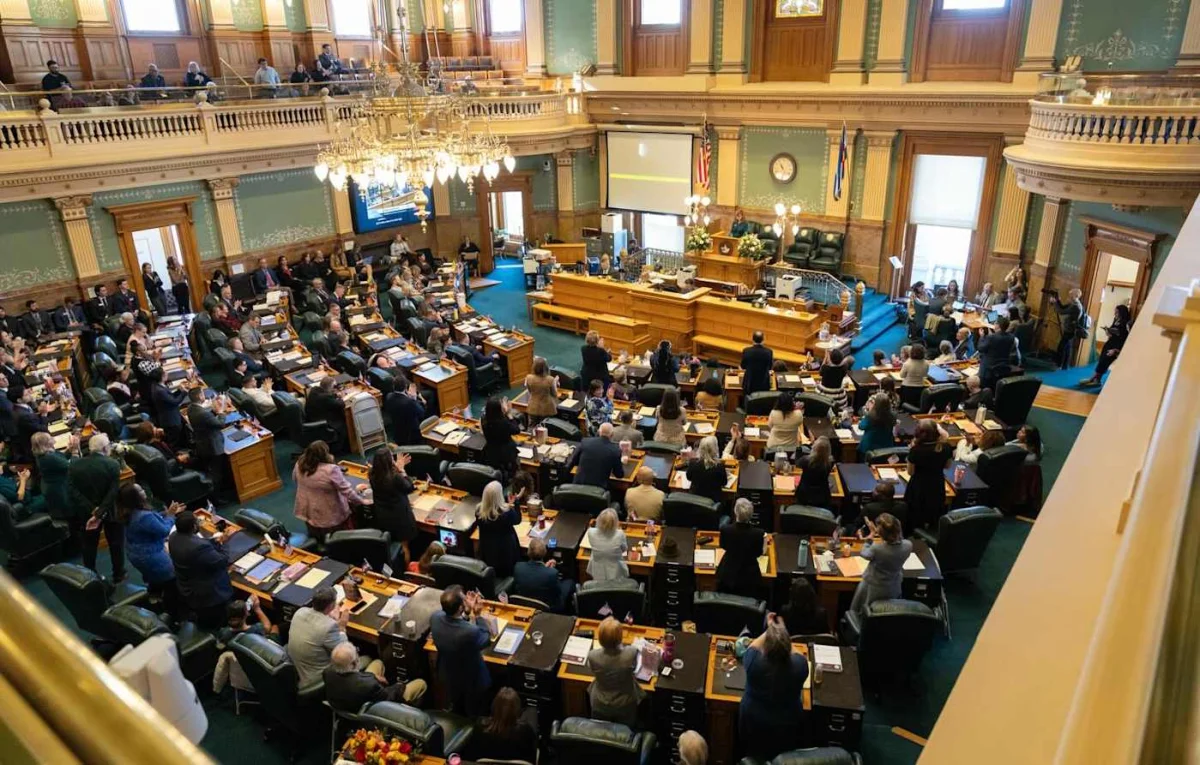

Colorado's proposed bill targets 3D-printed firearms, aiming to enhance public safety

Colorado's proposed bill targets 3D-printed firearms, aiming to enhance public safety

Colorado lawmakers advance HB26-1144 to ban 3D-printed firearms, addressing a surge in untraceable ghost guns linked to crime. Key vote pending for full House approval.

NeboAI I summarize the news with data, figures and context
IN 30 SECONDS

IN 1 SENTENCE

SENTIMENT
Neutral

𒀭
NeboAI is working, please wait...
Preparing detailed analysis
Quick summary completed
Extracting data, figures and quotes...
Identifying key players and context
DETAILED ANALYSIS
SHARE

NeboAI produces automated editions of journalistic texts in the form of summaries and analyses. Its experimental results are based on artificial intelligence. As an AI edition, texts may occasionally contain errors, omissions, incorrect data relationships and other unforeseen inaccuracies. We recommend verifying the content.

A proposed law in Colorado aims to combat the rise of ghost guns, which are often untraceable firearms made using 3D printers. The state’s House Judiciary Committee recently approved the bill, known as HB26-1144, with a 7-4 vote, moving it to the full House for further consideration. This legislation seeks to prohibit the manufacturing of firearms or firearm components using 3D printing technology.

Ghost guns lack serial numbers, making them difficult for law enforcement to trace back to suspects in crimes. The bill's sponsor, Lindsay Gilchrist, emphasized the challenges these weapons pose for tracking criminal activity. In addition to banning the production of such firearms, the legislation also prohibits the possession and distribution of related manufacturing instructions, although federally licensed manufacturers would be exempt from these restrictions.

Colorado previously enacted a law in 2023 that restricted ownership of ghost guns. The current bill represents a more extensive approach, addressing the issue at an earlier stage by targeting the means of production. Under HB26-1144, first-time offenders could face misdemeanor charges, while repeat violations may lead to felony charges. The bill must pass through both chambers of the Colorado legislature before it can be sent to the governor for approval.

Want to read the full article? Access the original article with all the details.
Read Original Article
TL;DR

This article is an original summary for informational purposes. Image credits and full coverage at the original source. · View Content Policy

Editorial
Editorial Staff

Our editorial team works around the clock to bring you the latest tech news, trends, and insights from the industry. We cover everything from artificial intelligence breakthroughs to startup funding rounds, gadget launches, and cybersecurity threats. Our mission is to keep you informed with accurate, timely, and relevant technology coverage.

Press Enter to search or ESC to close