
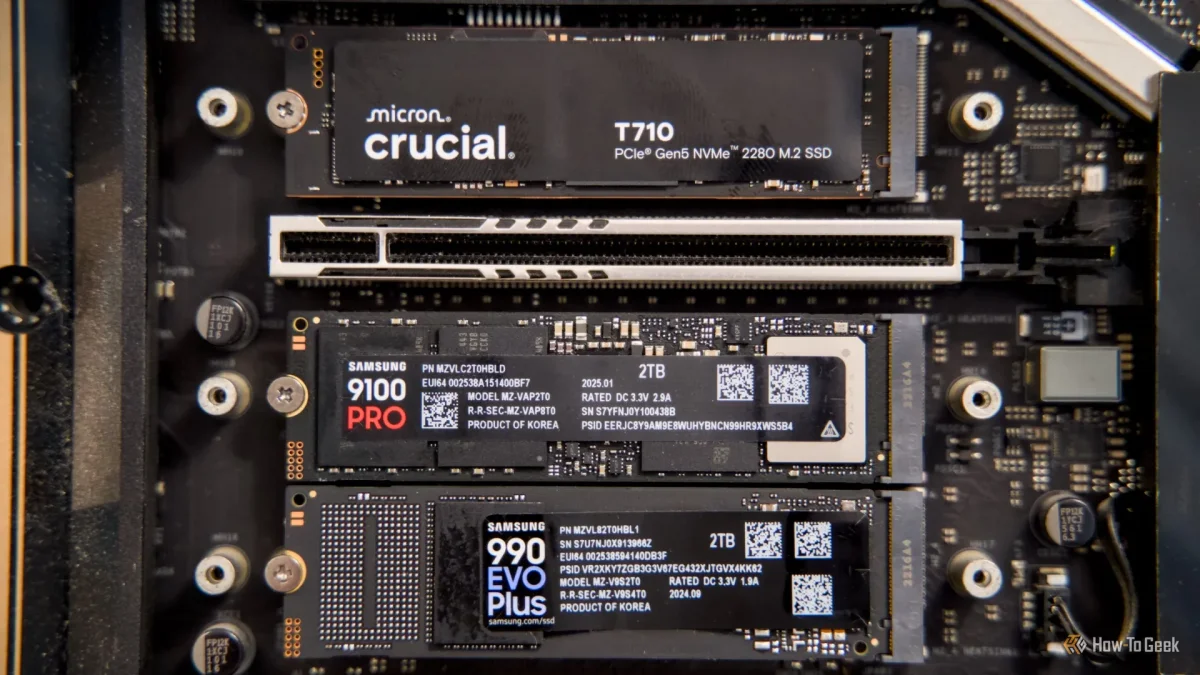

Gaming performance is primarily influenced by software rather than storage speed, with modern games no longer being limited by storage capacity. Although many PC gamers invest heavily in high-end hardware components, such as SSDs, the actual performance gains from upgrading to newer models are often minimal.
Switching from SATA to NVMe M.2 SSDs has led to noticeable improvements in system performance due to PCIe technology, which allows data to be transferred across multiple high-speed lanes. However, advancements in SSD technology, like PCIe Gen 5, offer little practical enhancement over Gen 4 for gaming purposes, even as they come with higher price tags.
Real-world tests indicate that the speed differences between PCIe Gen 3, Gen 4, and Gen 5 SSDs yield only marginal improvements, typically ranging from one to two seconds in load times for most games. Comparisons made by testing entities such as Hardware Unboxed reveal that even top models like the Samsung 9100 PRO show nearly identical performance to older generations. The slowest options remain traditional HDDs, which are increasingly considered inadequate for gaming needs.