
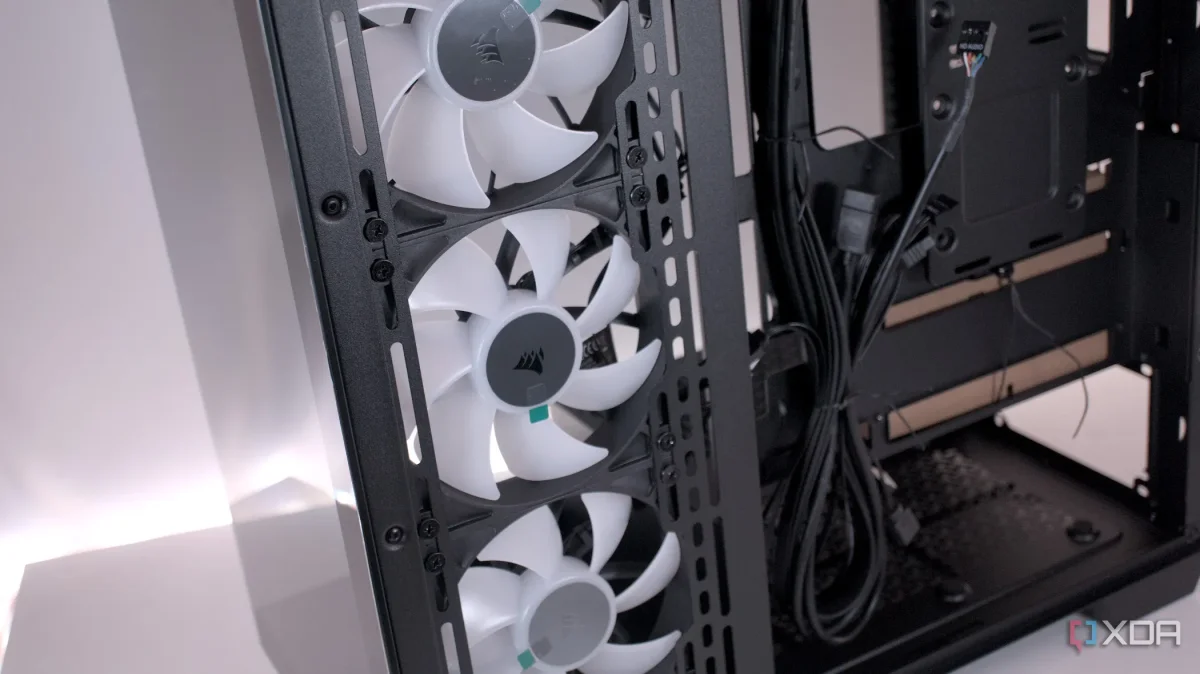

Diminishing Returns: Why Three Case Fans Maximize Cooling Efficiency for Gamers

Diminishing Returns: Why Three Case Fans Maximize Cooling Efficiency for Gamers

Most PC builds only need three fans for optimal airflow, handling 90% of cooling needs. Adding more can create turbulence and waste money—upgrade wisely for better performance.

NeboAI I summarize the news with data, figures and context
IN 30 SECONDS

IN 1 SENTENCE

SENTIMENT
Neutral

𒀭
NeboAI is working, please wait...
Preparing detailed analysis
Quick summary completed
Extracting data, figures and quotes...
Identifying key players and context
DETAILED ANALYSIS
SHARE

NeboAI produces automated editions of journalistic texts in the form of summaries and analyses. Its experimental results are based on artificial intelligence. As an AI edition, texts may occasionally contain errors, omissions, incorrect data relationships and other unforeseen inaccuracies. We recommend verifying the content.

In modern PC builds, the trend of larger GPUs has led to a corresponding increase in the size of PC cases, which often include space for numerous cooling fans. However, many setups may effectively function with only three fans, as the majority of cooling is achieved by this minimal configuration. The initial fan serves as an exhaust, crucial for removing heat from the CPU and GPU, while two intake fans provide necessary airflow.

Adding more than three fans typically yields minimal thermal benefits and can even disrupt the established airflow, causing turbulence that impedes cooling efficiency. The concept of optimal airflow suggests that the first three fans handle about 90% of cooling needs, making additional fans an unnecessary expense. Instead of purchasing extra fans, investing in alternative cooling methods may prove more beneficial for enhancing overall system performance.

By maintaining a clear path for air circulation—two intakes and one exhaust—PC builders can ensure that hot air is efficiently expelled and replaced with cooler air. This strategy helps prevent dust accumulation and maximizes cooling without incurring additional costs for fans that contribute little to temperature regulation.

Want to read the full article? Access the original article with all the details.
Read Original Article
TL;DR

This article is an original summary for informational purposes. Image credits and full coverage at the original source. · View Content Policy

Editorial
Editorial Staff

Our editorial team works around the clock to bring you the latest tech news, trends, and insights from the industry. We cover everything from artificial intelligence breakthroughs to startup funding rounds, gadget launches, and cybersecurity threats. Our mission is to keep you informed with accurate, timely, and relevant technology coverage.

Press Enter to search or ESC to close