
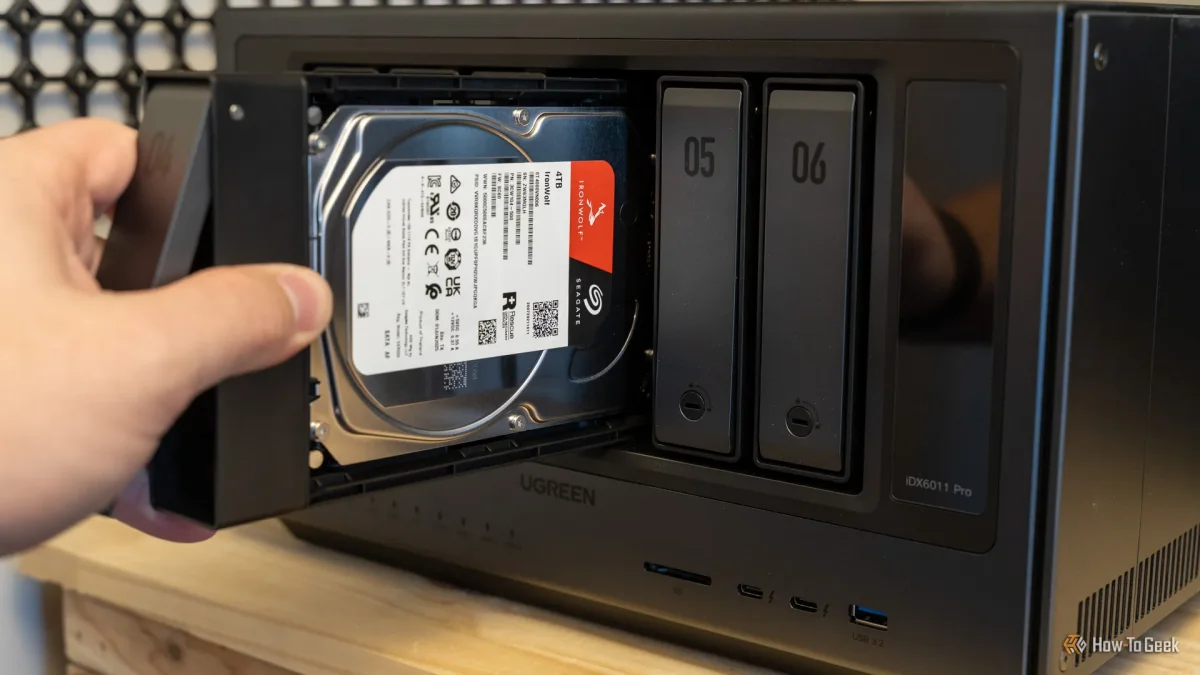

RAID 0's allure fades as users face double the failure risk without speed benefits

RAID 0's allure fades as users face double the failure risk without speed benefits

RAID 0 can theoretically boost speeds to 560 MB/s with four drives, but its real-world benefits are diminishing as SSDs eliminate mechanical limitations. Is speed worth the risk?

NeboAI I summarize the news with data, figures and context
IN 30 SECONDS

IN 1 SENTENCE

SENTIMENT
Neutral

𒀭
NeboAI is working, please wait...
Preparing detailed analysis
Quick summary completed
Extracting data, figures and quotes...
Identifying key players and context
DETAILED ANALYSIS
SHARE

NeboAI produces automated editions of journalistic texts in the form of summaries and analyses. Its experimental results are based on artificial intelligence. As an AI edition, texts may occasionally contain errors, omissions, incorrect data relationships and other unforeseen inaccuracies. We recommend verifying the content.

RAID 0, known for its data striping technique, allows for increased throughput by distributing data across multiple drives. This method can potentially boost performance significantly, with two disks achieving around 280 MB/s and four disks nearing 560 MB/s in sequential throughput. Originally, this setup was favored for tasks like video editing and large file processing, where speed was paramount.

However, the current storage landscape has evolved dramatically due to the rise of solid-state drives (SSDs), which eliminate the mechanical delays associated with spinning disks. While RAID 0 was once considered a viable option for enhancing performance, its benefits may not be as pronounced today, especially when assessed against real-world workloads rather than synthetic benchmarks.

Additionally, the inherent risk of data loss remains a significant concern, as any drive failure in a RAID 0 configuration results in total data loss. This reality prompts users to reconsider the suitability of RAID 0 in light of modern storage advancements and the availability of more reliable alternatives.

Want to read the full article? Access the original article with all the details.
Read Original Article
TL;DR

This article is an original summary for informational purposes. Image credits and full coverage at the original source. · View Content Policy

Editorial
Editorial Staff

Our editorial team works around the clock to bring you the latest tech news, trends, and insights from the industry. We cover everything from artificial intelligence breakthroughs to startup funding rounds, gadget launches, and cybersecurity threats. Our mission is to keep you informed with accurate, timely, and relevant technology coverage.

Press Enter to search or ESC to close