

Luxury Market Embraces Innovation as Uber and Nuro Launch Robotaxi Trials

Luxury Market Embraces Innovation as Uber and Nuro Launch Robotaxi Trials

Uber is testing autonomous rides in the Bay Area with Lucid Gravity SUVs, aiming for 20,000 robotaxis by 2026, signaling a major shift in ridesharing.

NeboAI I summarize the news with data, figures and context
IN 30 SECONDS

IN 1 SENTENCE

SENTIMENT
Neutral

𒀭
NeboAI is working, please wait...
Preparing detailed analysis
Quick summary completed
Extracting data, figures and quotes...
Identifying key players and context
DETAILED ANALYSIS
SHARE

NeboAI produces automated editions of journalistic texts in the form of summaries and analyses. Its experimental results are based on artificial intelligence. As an AI edition, texts may occasionally contain errors, omissions, incorrect data relationships and other unforeseen inaccuracies. We recommend verifying the content.

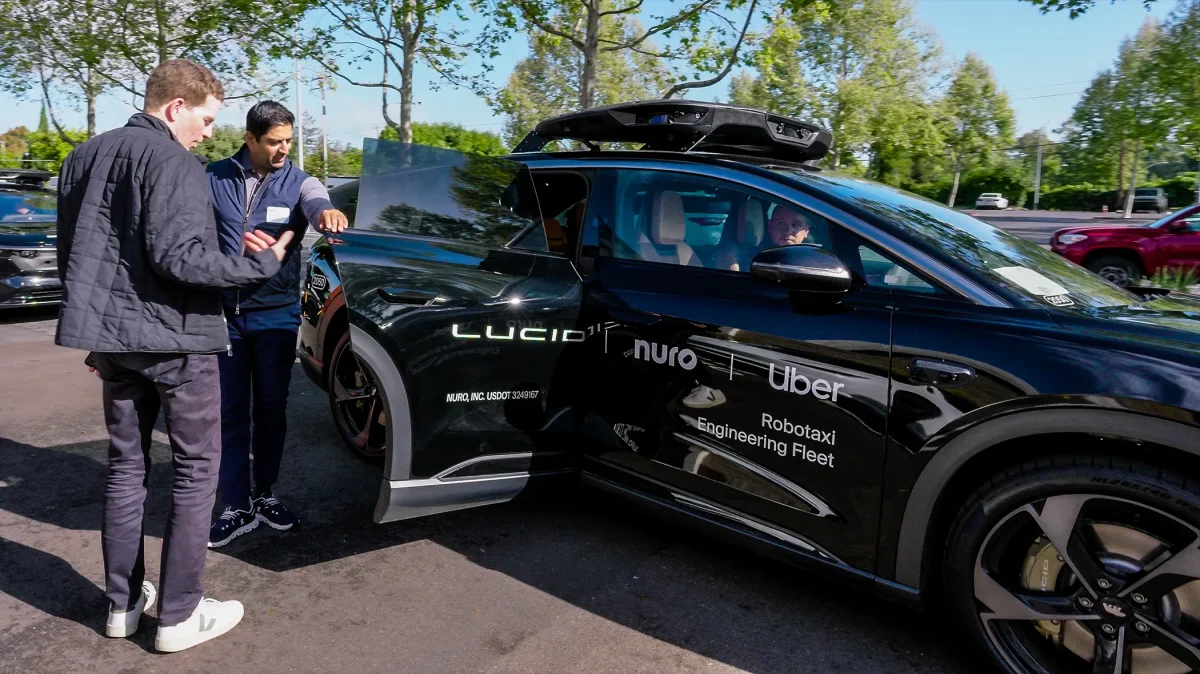
Uber has initiated employee test rides of its self-driving taxi service in the San Francisco Bay Area, utilizing upgraded Lucid Gravity SUVs equipped with Nuro's autonomous technology. While these test rides still require a safety driver, Uber employees can now request rides through the app, contributing to the validation of the robotaxis in real-world conditions.

In July 2025, Uber announced its collaboration with Nuro and Lucid, detailing plans to launch 20,000 robotaxis by 2026. The modified Gravity vehicles, revealed in January 2026, include advanced features such as a roof-mounted sensor array, cameras, and in-cabin screens that allow passengers to customize their experiences. Public rides are anticipated to commence in 2026, expanding to numerous global markets over the next six years.

Additionally, Uber is working with partners like Amazon's Zoox, Motional, NVIDIA, and Rivian to advance its self-driving ambitions. Uber's strategy has shifted since selling its internal robotaxi division in 2020, focusing now on partnerships that enhance its presence in the autonomous ride sector. A significant investment of $1.25 billion into Rivian is set to support the development of fully self-driving vehicles by 2031.

Want to read the full article? Access the original article with all the details.
Read Original Article
TL;DR

This article is an original summary for informational purposes. Image credits and full coverage at the original source. · View Content Policy

Editorial
Editorial Staff

Our editorial team works around the clock to bring you the latest tech news, trends, and insights from the industry. We cover everything from artificial intelligence breakthroughs to startup funding rounds, gadget launches, and cybersecurity threats. Our mission is to keep you informed with accurate, timely, and relevant technology coverage.

Press Enter to search or ESC to close