
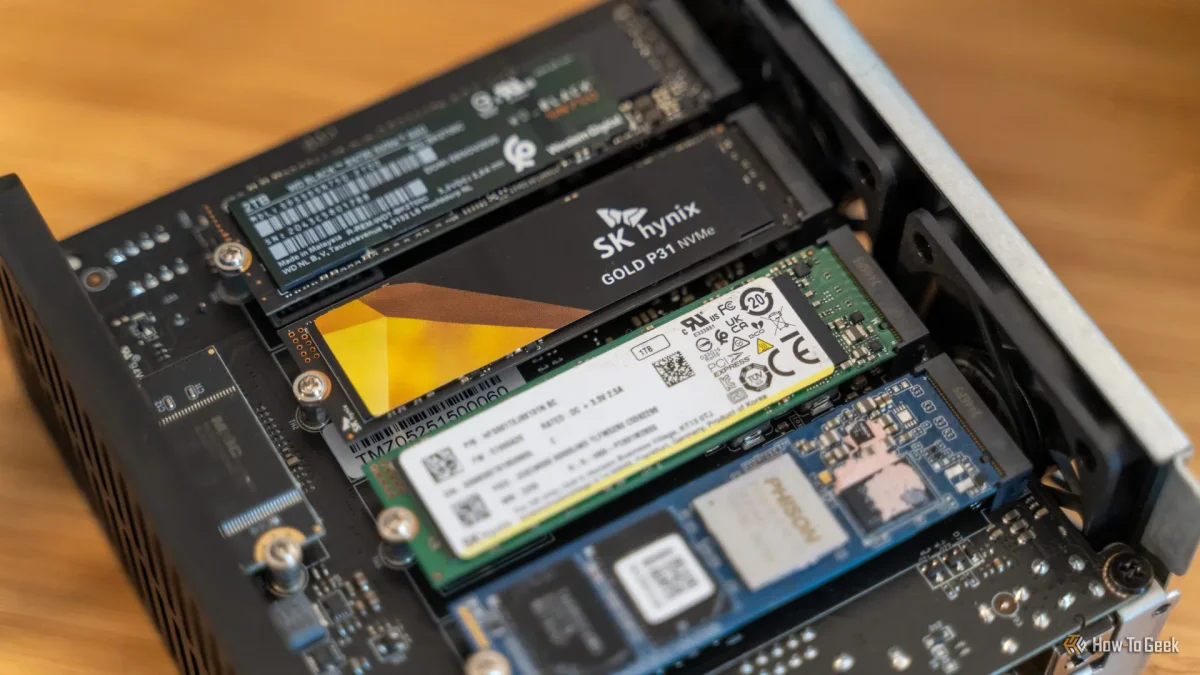

An all-SSD NAS system can incur substantial costs, especially when compared to hybrid or all-HDD alternatives. Users often seek this configuration for its potential in faster file transfers, but many do not fully utilize that capability. Unless a local network operates on multi-gig speeds (2.5Gb/s and higher), the performance of SSDs may be limited by the network's bandwidth.
Theoretical transfer rates for a 1Gb/s connection cap out at around 125MB/s, typically achieving 110-120MB/s. This means that the advantages of NVMe SSDs may be wasted unless the network infrastructure is upgraded. For improved performance, utilizing an SSD as a boot drive or cache can enhance the efficiency of a NAS, but for straightforward storage needs, HDDs are generally more cost-effective.
Transitioning to multi-gig networking can make SSDs more beneficial, especially at 2.5GbE where their advantages become more apparent. However, many home users may find the cost of 10Gb/s networking unnecessary. While the initial investment in SSDs may seem daunting, the long-term savings from power efficiency remain uncertain, making it essential for potential buyers to consider their actual storage needs.